WHEN AI CAN RECREATE YOU
Deepfakes, Facial Data, and the New Security Problem of Synthetic Identity
Generative AI has made it possible to create increasingly realistic representations of people from surprisingly small amounts of information. The technology is transforming photography, identity, authentication and digital trust.
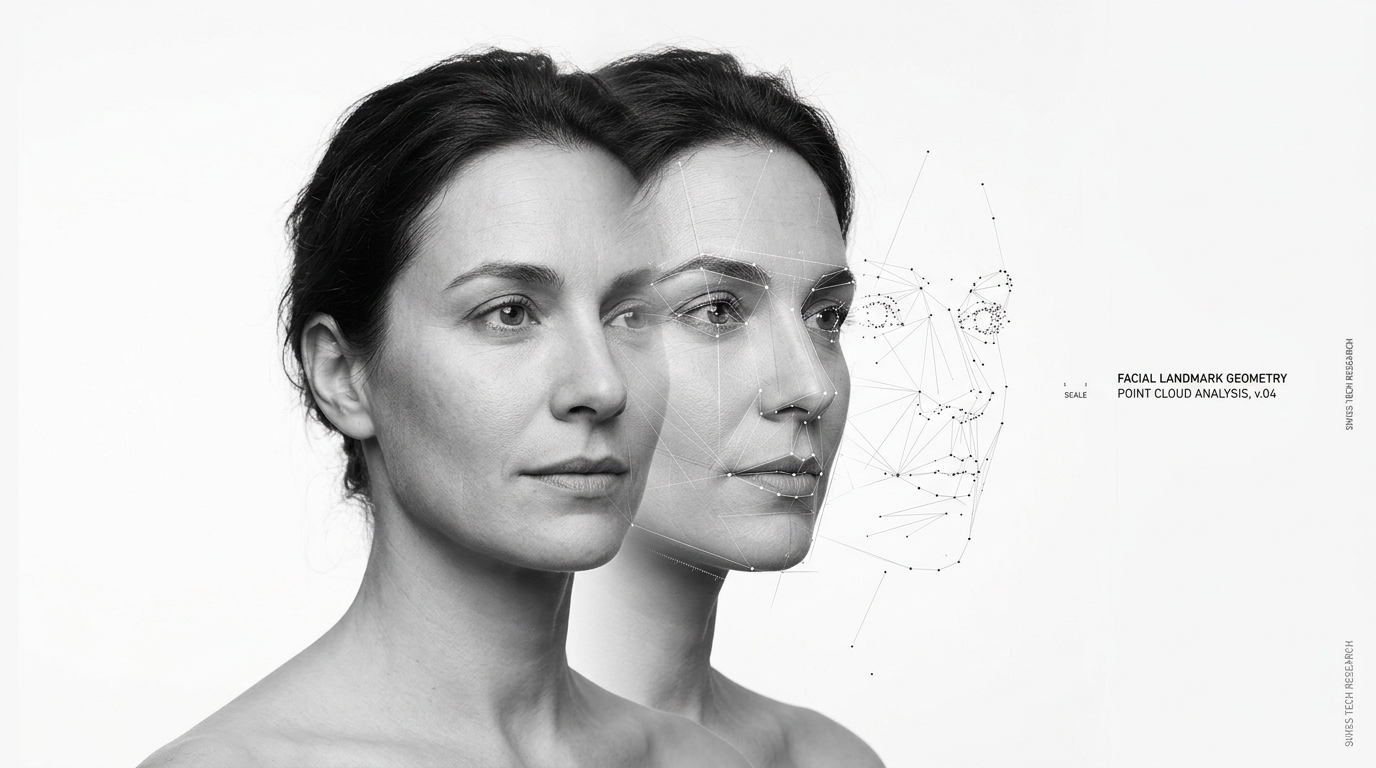
Table of Contents (10 Chapters)▼
When a photograph stops being proof
A photograph used to be a record of something that happened.
Someone stood in front of a camera. Light reached a sensor. A file was created. That file represented a particular moment in the physical world.
Generative artificial intelligence is changing that relationship.
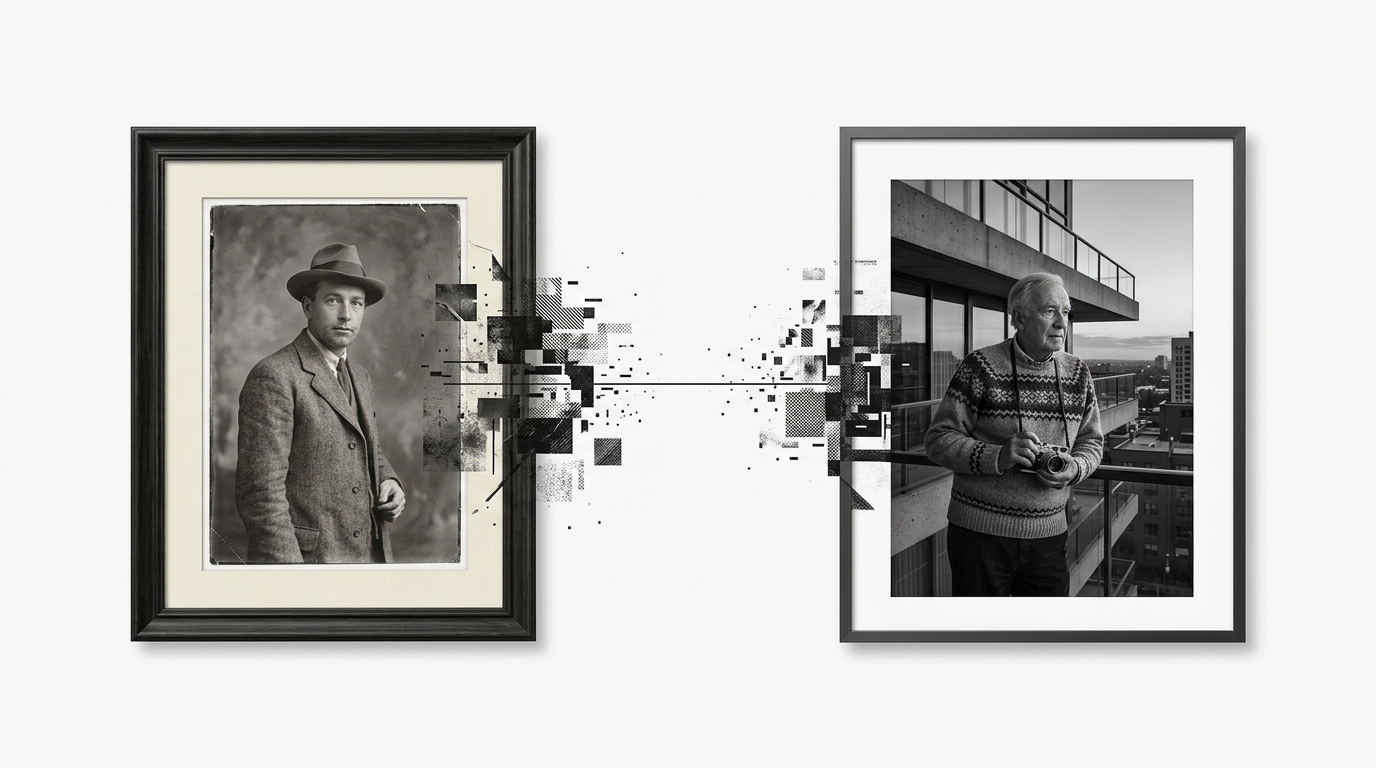
Today, a person can upload a photograph of themselves to an AI system and ask it to place them in another decade, change their clothing, alter the environment, restore an old portrait, or generate an entirely new scene. The resulting picture may never have existed in the physical world, yet it can look completely photographic.
At first glance, this appears to be a delightful creative novelty. But over the last few weeks of researching this subject, I kept coming back to one uncomfortable observation: the exact same technology that makes it effortless to place your face into an archival vintage portrait is quietly dismantling the historical bond between visual evidence and physical reality.
“What happens when a human face becomes computationally reproducible?”
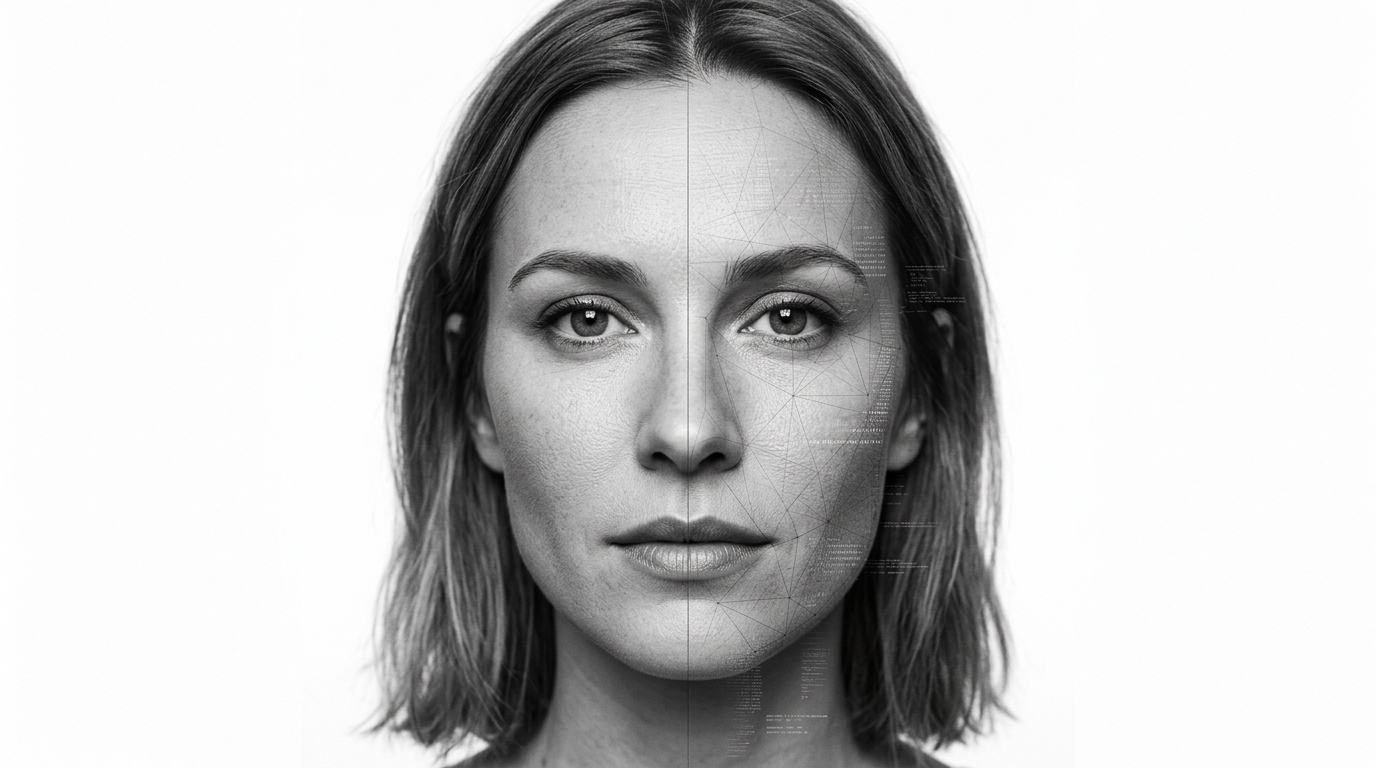
The public debate is often framed too narrowly as a question about “deepfake pictures on social media.” The larger issue is that AI is making human appearance increasingly computable, reproducible, and manipulable.
A face is no longer merely an image a camera captures. It can become data that machines analyze, parameterize, synthesize, and recombine. That does not mean every consumer app is secretly harvesting biometric files; it means facial imagery now exists inside an ecosystem of generative models where the line between an image of a person and the data defining their identity is beginning to dissolve.
From Photograph to Synthetic Reality
The first major shift brought by generative models is that the physical camera is no longer the sole source of realistic imagery.
Traditional photography records an event that occurred. Generative AI can construct an event that never did. A photograph shows someone standing on a balcony because they were physically there. A generative diffusion model can render the same individual in that exact spot with believable natural lighting, authentic skin texture, and realistic depth of field—without the person ever visiting that location.
Over the past several years, generative architectures have evolved from early GANs and autoencoders toward large latent diffusion systems. As these models improve, visual fidelity alone can no longer serve as proof of historical truth. A picture can be optically flawless and historically completely fabricated.
“Visual realism is becoming separated from physical reality.”
Your Face Is More Than a Picture
To understand why this matters for security, it is helpful to understand what happens under the hood when an algorithm processes a face.
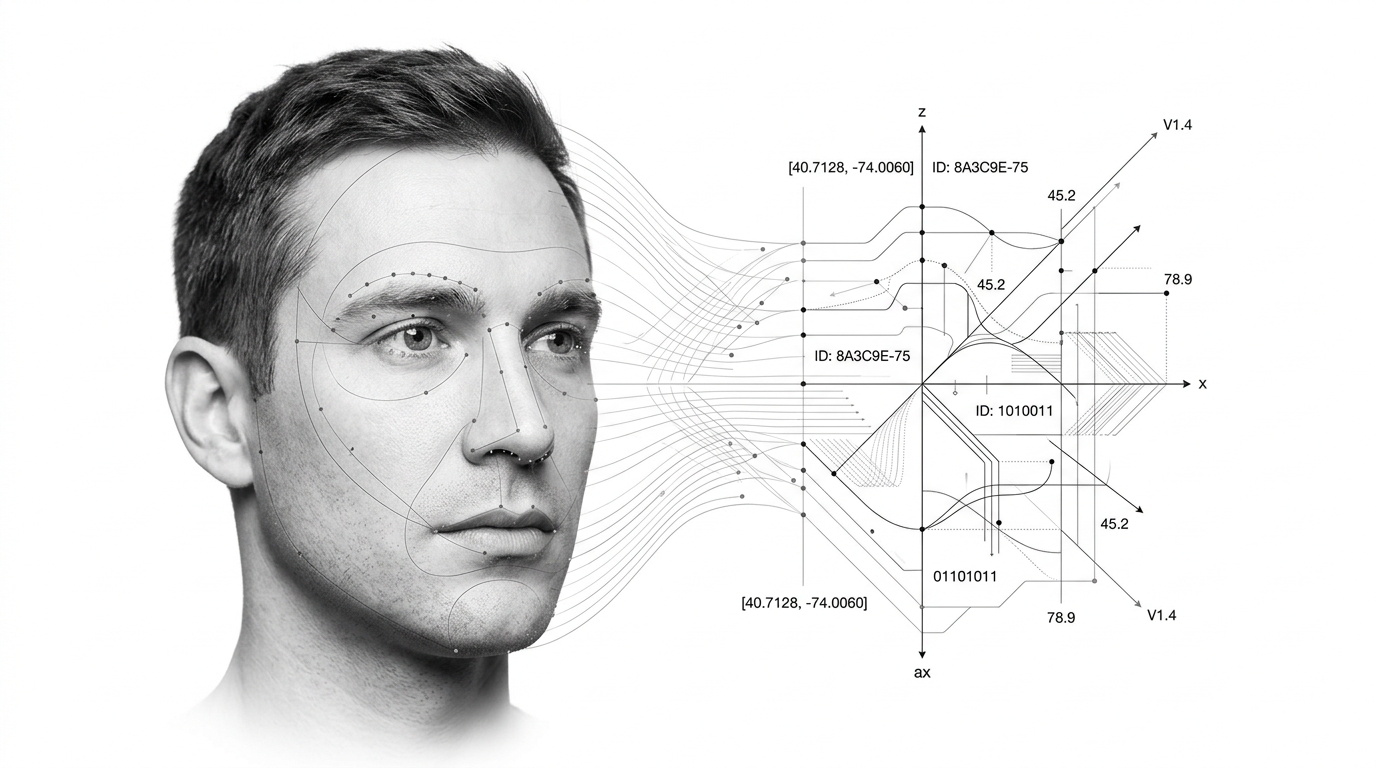
A standard facial recognition pipeline follows a structured sequence: the system detects the face, maps key landmarks around the eyes, nose, and jawline, extracts numerical features, and calculates a high-dimensional mathematical vector representing facial geometry.
A facial photograph and a biometric template are related, but they are not the same technical construct. Uploading an image to an AI tool does not automatically mean a permanent biometric template has been created or stored.
Whether a service extracts biometric characteristics, retains intermediate weights, uses images for model fine-tuning, or immediately deletes them depends on its specific technical architecture, user settings, and data retention policies.
The crucial point is that a clear photograph contains identity-relevant structure. While casual image editors once only adjusted contrast or cropped pixels, modern AI systems infer underlying 3D geometry and facial characteristics—allowing them to synthesize entirely new expressions, angles, and poses that retain the subject's distinct likeness.
The Real Problem Is Accumulation
When people express concern about facial data, they often focus on a single photograph. But the real vulnerability is not one selfie uploaded to a creative tool. It is data accumulation across the web.
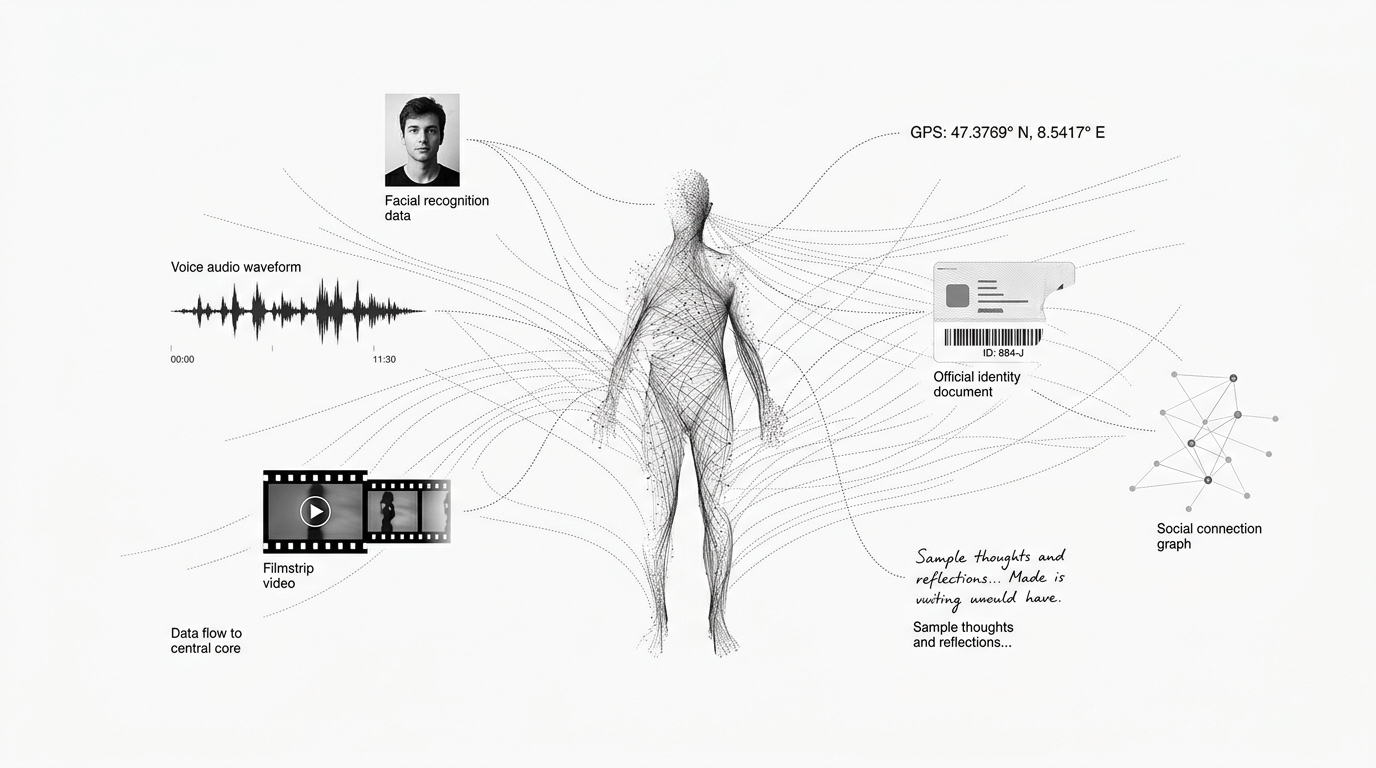
Think about the sheer volume of personal artifacts an ordinary person leaves across digital platforms over ten or fifteen years:
- High-resolution photos from family events, travel, and social profiles
- Short video clips, video calls, and stories that reveal facial motion
- Voice notes, podcasts, and recordings containing vocal cadence
- Public essays, messages, and posts that reflect syntax and writing style
- Professional resumes and public documents detailing career history
In isolation, each fragment appears harmless. But modern multimodal AI radically alters the cost of connecting them. A face connects to a name; a voice clip supplies timbre; a writing sample supplies conversational tone.
The central question evolvess: not simply “Who has my photograph?” but “Who can assemble a computational model of me from my collective digital trail?”
When Synthetic Identity Becomes an Attack
Historically, identity theft required stealing something tangible: a physical passport, a credit card, a password, or a Social Security number.
AI introduces another possibility: creating something convincing enough to represent another person.
This becomes especially consequential in remote digital onboarding. Today, banking, fintech, insurance, telecommunications, and government portals rely heavily on automated optical character recognition and video verification.
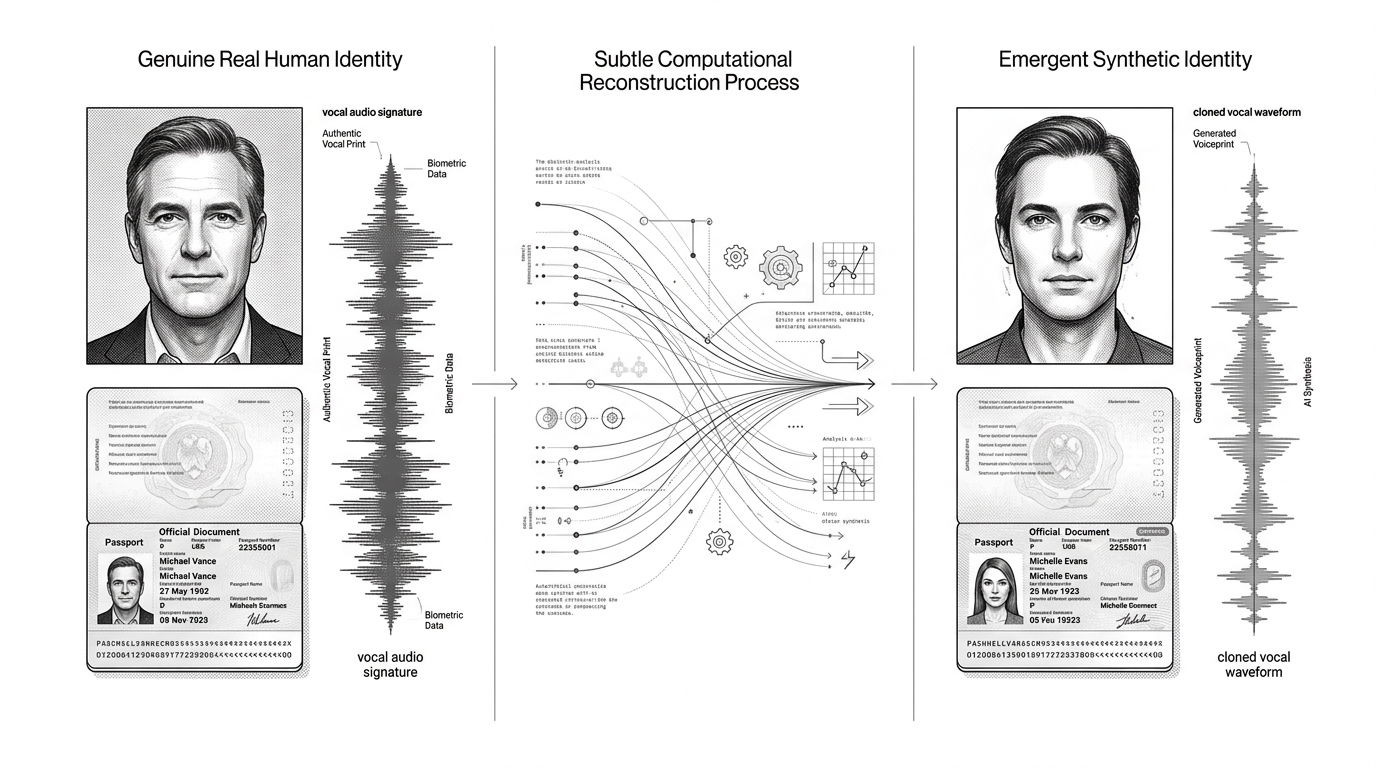
Institutions such as the National Institute of Standards and Technology (NIST) have highlighted that synthetic media and digital injection attacks represent a direct challenge to remote identity proofing. An attacker can combine real personal data (such as a leaked name and date of birth) with a generated facial video and a cloned voice to satisfy automated onboarding checks.
Furthermore, research on facial morphing has shown that a single synthetic photograph can be engineered to share mathematical similarities with two distinct individuals—potentially enabling a manipulated document to be accepted by automated biometric gates for multiple people.
“The threat is not limited to making a fake person. It also includes making one person resemble another.”
When Seeing Is No Longer Believing
Consider a real-world scenario that organizations increasingly prepare for: a finance employee receives an urgent video call from their chief executive.
The face on screen is familiar. The voice sounds exact. The mannerisms match. The request is urgent: “We need to execute this wire transfer immediately for the acquisition. I will brief the board afterwards.”
If the organization relies solely on sensory recognition—believing that seeing a face and hearing a voice proves identity—it falls victim to a dangerous assumption: appearance equals identity.
The Federal Trade Commission (FTC) has warned about voice cloning being used in consumer impersonation fraud, where callers mimic family members in distress.
Beyond direct fraud, deepfakes introduce another subtle problem known as the Liar’s Dividend. When society knows that hyper-realistic fakes exist, bad actors confronted with genuine evidence of wrongdoing can simply claim: “That video was generated by AI.”
Research published in Communications Psychology found that synthetic videos could influence viewers' beliefs even when participants were explicitly warned beforehand that the footage was fake. The crisis is twofold: fake evidence can look real, and real evidence can be dismissed as fake.
Detection Is Not Enough
When confronted with deepfakes, the intuitive technical response is: “Can’t we just build a detector to flag them?”
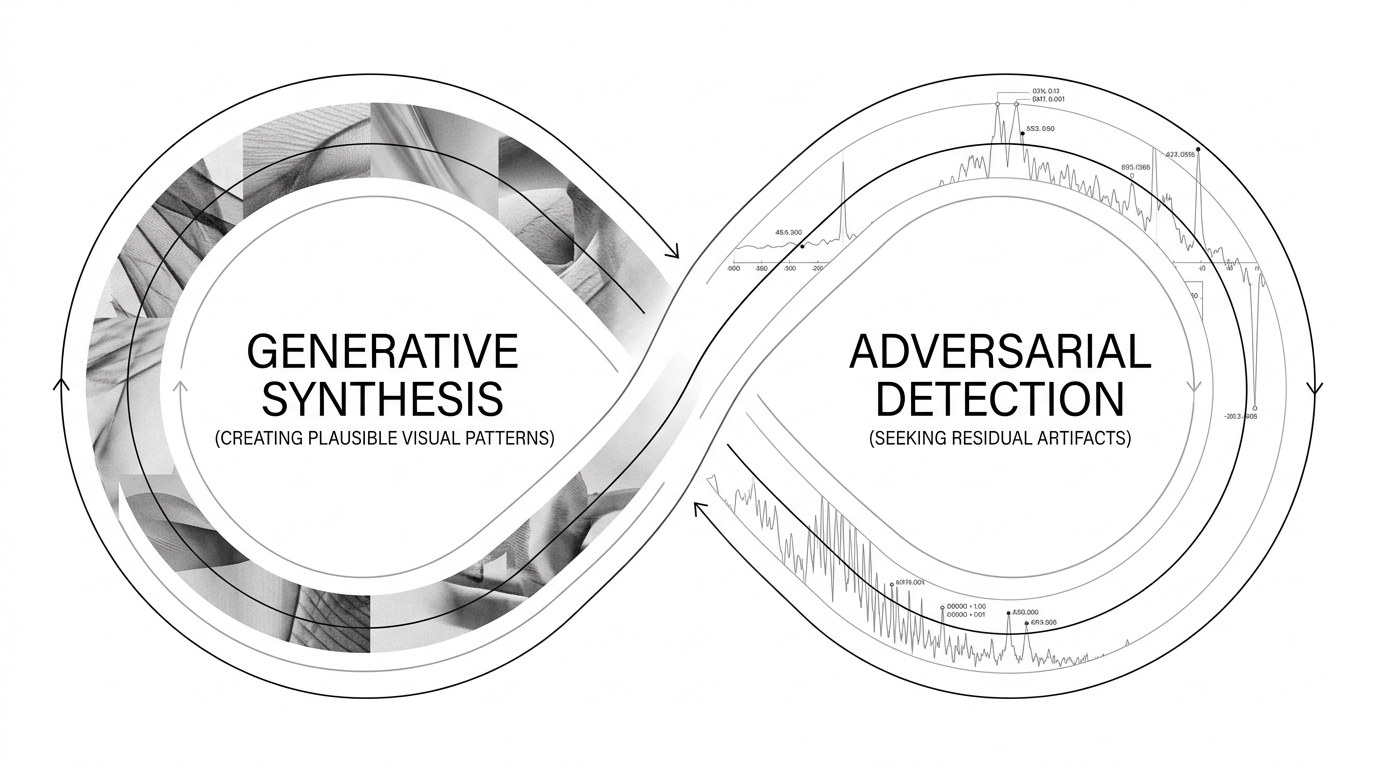
Detection research is important, but relying solely on detectors creates a structural arms race:
A detector is always looking for artifacts that the generator is actively learning to minimize. A model trained to catch warping around ears or unnatural blinking becomes ineffective as new architectures eliminate those exact telltales. Furthermore, common real-world operations—such as video compression on WhatsApp or re-encoding on YouTube—frequently strip away the subtle pixel artifacts detectors rely on.
Security architecture should never depend entirely on one machine learning model deciding whether another model is lying.
Where Did This Image Come From?
Because visual inspection and passive detectors have inherent limits, the security paradigm is shifting toward a different question:
“Does this image look real—or can its origin be verified?”
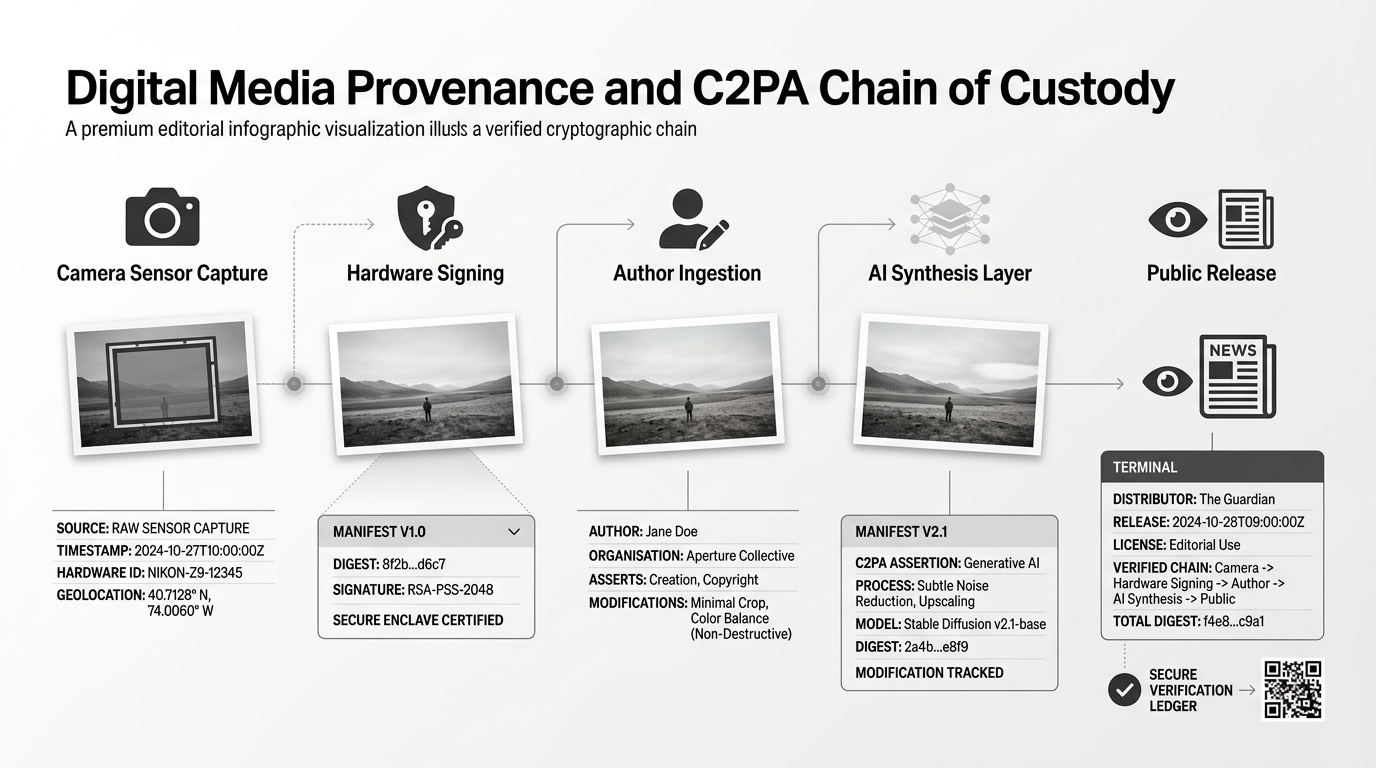
This is the foundation of Content Provenance. Instead of inspecting an isolated file at the end of its distribution, provenance frameworks record its verifiable history from the moment of capture.
Standards developed by the Coalition for Content Provenance and Authenticity (C2PA) enable camera sensors, editing suites, and generative platforms to attach cryptographically signed manifests to digital media. When an image is created, edited, or transformed by an AI model, that action is recorded in tamper-evident metadata.
Provenance does not prevent someone from generating synthetic images; rather, it provides a trustworthy method for platforms, journalists, and identity systems to verify whether a piece of media was captured by a genuine sensor or generated by an algorithm.
Identity in the Real World
Technical standards must interact with real-world law and policy.
In the European Union, the Artificial Intelligence Act (Article 50) introduces transparency mandates requiring providers of AI systems that generate synthetic content to ensure that outputs are marked in a machine-readable format and disclosed as artificial.
In India, the governance of digital identity is evolving rapidly through the Digital Personal Data Protection (DPDP) Act, 2023 and the DPDP Rules, 2025. As India's digital economy expands across UPI, DigiLocker, and Aadhaar-enabled services, establishing clear boundaries around the processing of biometric and facial data becomes a cornerstone of digital public infrastructure.
Yet regulation alone cannot solve the problem unless we rethink what meaningful consent looks like. When someone uploads a personal photograph today, consent should not be a buried clause in a fifty-page terms-of-service document. Users deserve straightforward answers:
- What features are extracted from my image?
- How long is my raw photograph stored on your servers?
- Is my likeness used to fine-tune future model checkpoints?
- Can I permanently delete all derived data with one click?
From Personal Data to Personal Models
Historically, privacy law and cybersecurity were designed around the concept of protecting stored data. You had records in a database—a date of birth, an address, a photograph file—and the goal was to restrict unauthorized access to those records.
Generative AI introduces a fundamentally different challenge: computational inference.
A database stores files; a trained neural model internalizes patterns. A model does not need to store your exact photograph to generate a convincing image of you; it only needs to retain the statistical weights that capture your facial structure, voice harmonics, and mannerisms.
“Privacy is moving from controlling data to controlling inference and representation.”
The defining question of the next decade is not merely “What files are stored about me?” but “What computational representations can be constructed of me?”
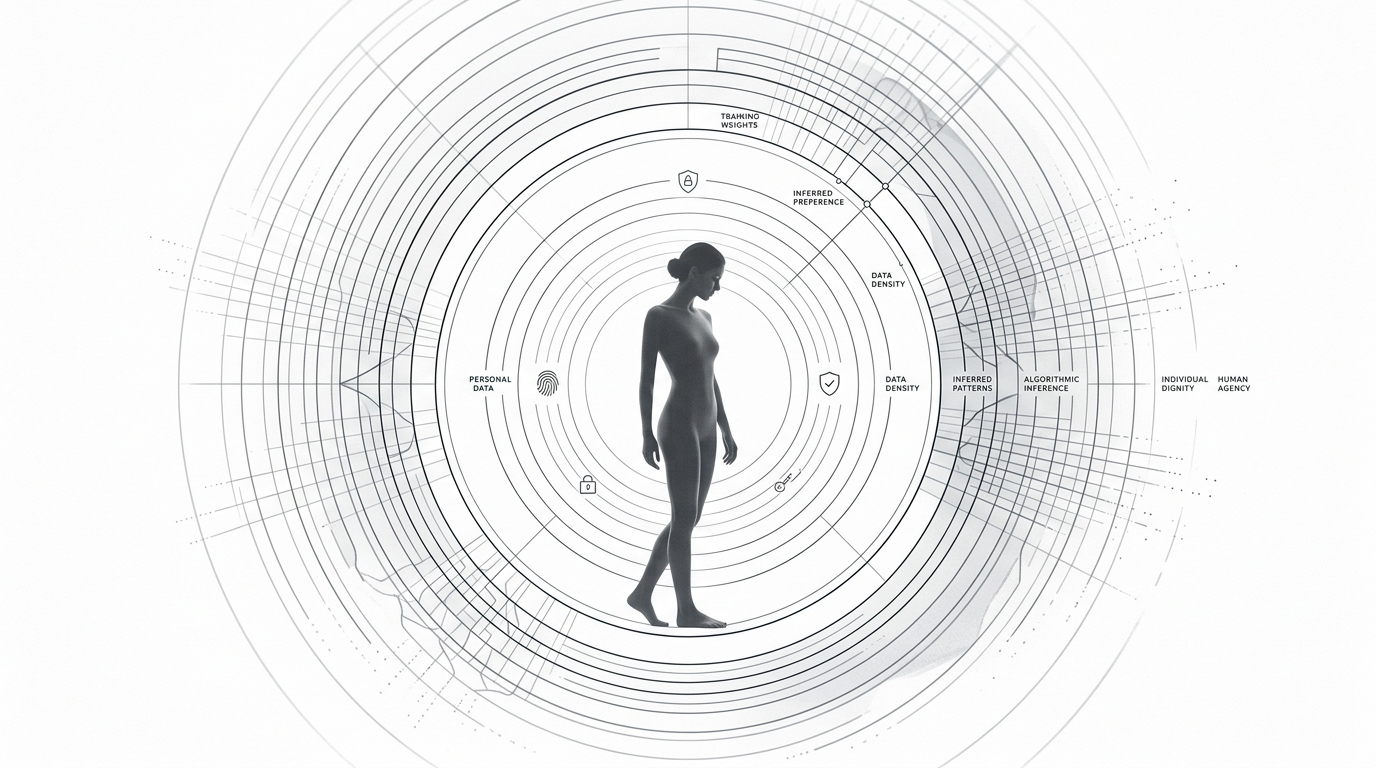
THE REAL DEEPFAKE PROBLEM
The debate over AI-generated images is not really about whether people should upload portraits to social apps. It is about a deeper threshold our digital society is crossing: human identity is becoming computable, reproducible, and manipulable.
Generative AI is a remarkable creative medium. It opens extraordinary possibilities in art, education, historical exploration, accessibility, and communication. The objective should never be to stifle creative technology.
Instead, our responsibility as builders, researchers, and citizens is to construct a digital world where synthetic media is transparent, where digital identity rests on cryptographic provenance rather than mere visual appearance, and where real human beings remain in control of how they are represented.
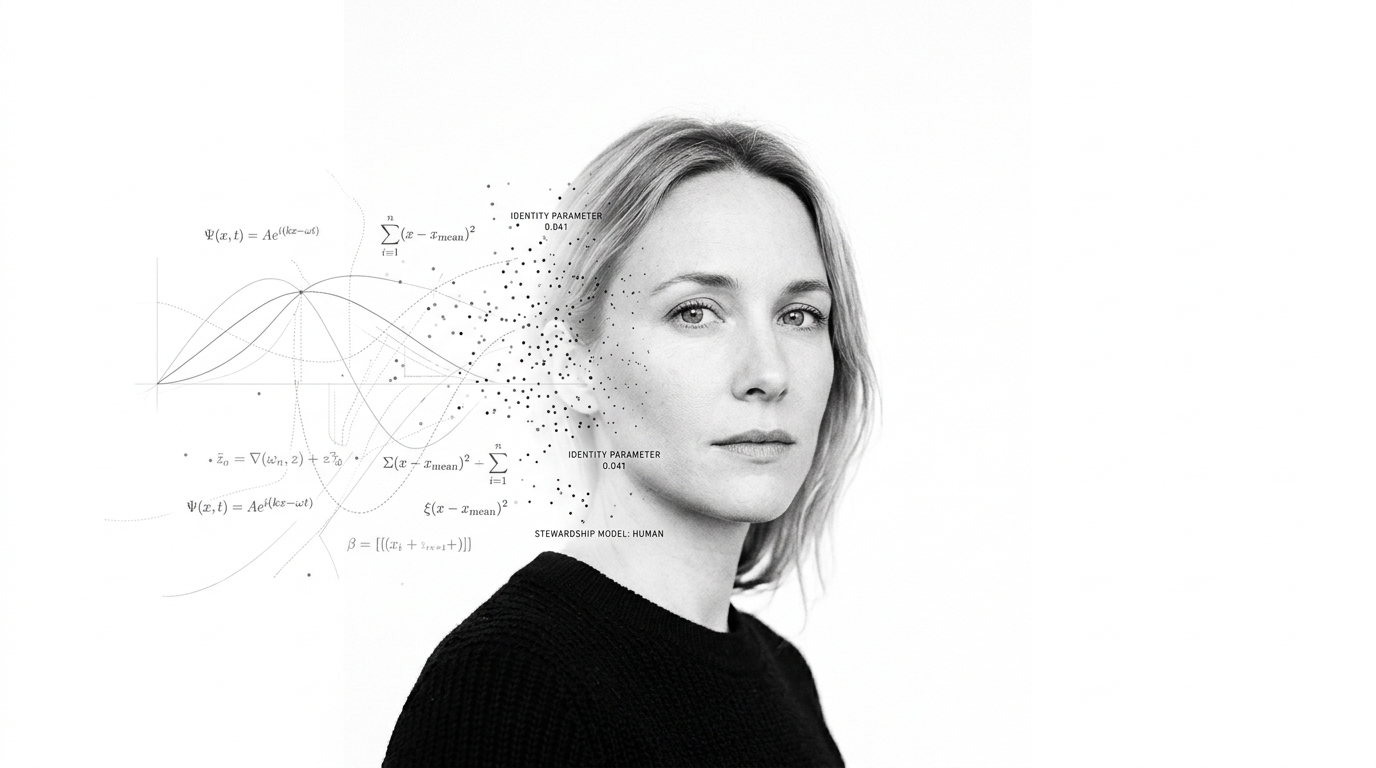
AI can increasingly represent us. The question is whether we will build the systems necessary to remain in control of those representations.
WHAT DOES THIS IMAGE REVEAL?
We usually see an image as a picture.
A computer sees a file.
That file can contain information that is invisible in the pixels themselves — sometimes about when the image was created, what device captured it, whether it has been edited, and, in some cases, where it was taken.
Upload an image below and inspect what can actually be recovered from the file.
OR
Supported formats: JPG, PNG, WebP, TIFF, HEIC (Max 50 MB)
Privacy first: 100% in-browser client-side analysis. No image data leaves your device or is transmitted to external servers.
“An image can tell a computer much more than it tells a human eye. But analysis has limits. Metadata can disappear. Provenance can be missing. Detection can be wrong. An image can contain evidence without containing the whole truth. The goal is not to make a machine that claims to know everything about an image. The goal is to make the invisible parts of digital media visible — and to make the limits of what we know visible too.”
• NIST Digital Identity Guidelines (SP 800-63-4 / SP 800-63A) — Specifications on enrollment, presentation-attack detection, and synthetic media threat modeling.
• NIST Face Recognition Technology Evaluation (FRTE) — Empirical benchmarks on 1:1 and 1:N facial recognition accuracy, demographic differentials, and morphing detection.
• Coalition for Content Provenance and Authenticity (C2PA) — Open technical standards for cryptographically verifiable Content Credentials and digital asset history.
• NIST Media Forensics & Synthetic Content Research — Technical evaluations of media manipulation detection.
• European Union AI Act (Article 50) — Transparency obligations for generative AI systems, machine-readable markings, and deepfake disclosures.
• India Digital Personal Data Protection Act, 2023 & DPDP Rules, 2025 — Statutory framework governing digital personal data, biometric safeguards, and user rights.
• Federal Trade Commission (FTC) AI Impersonation Rules — Regulatory actions on voice cloning, executive impersonation, and deceptive consumer practices.
• Communications Psychology (Nature Portfolio) — Empirical research on deepfake warning efficacy, belief persistence, and the psychological mechanisms of the liar’s dividend.
• OpenAI Data Controls & Privacy Documentation — Official technical specifications on consumer multimodal data retention, enterprise zero-retention API policies, and training opt-out mechanisms.