GUNRA: Systemic Magnetic Humanoid Architecture
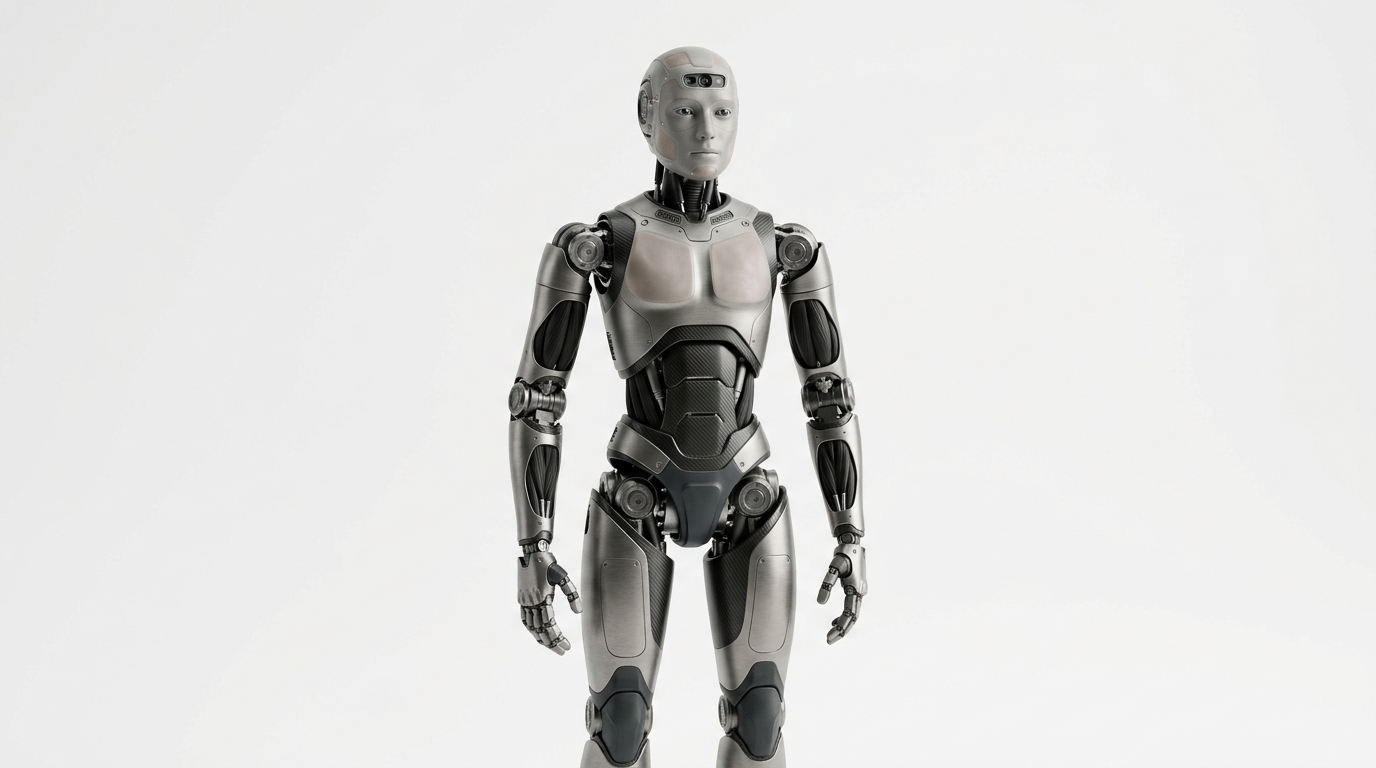
An experimental humanoid robotics platform exploring the integration of embodied artificial intelligence, multi-agent intelligence, advanced sensing, magnetic actuation, synthetic materials, energy recovery, and language-driven robotics into a single physical system.
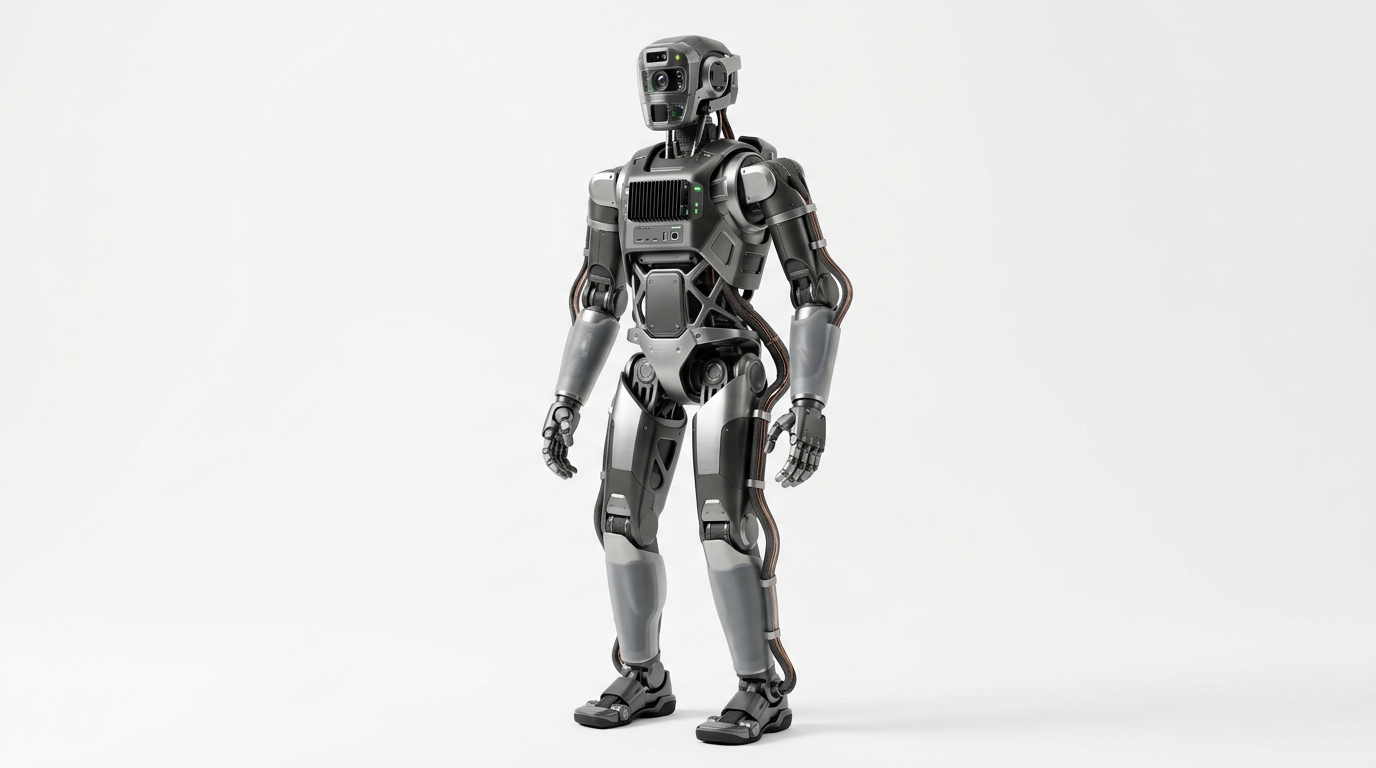
“How can an intelligent computational system become a physically capable, continuously sensing, language-driven machine that can perceive its environment, reason about it, coordinate internal agents, and translate decisions into precise physical action?”
What is GUNRA?
GUNRA is an experimental humanoid robotics project focused on embodied intelligence. Rather than treating a humanoid robot as simply a collection of motors, sensors, batteries, and processors, GUNRA investigates a systemic architecture in which perception, reasoning, coordination, movement, energy management, and physical interaction operate as interconnected subsystems.
The Model 7.3 blueprint expands this foundation into five major engineering domains:
Computational Intelligence
Hybrid quantum-classical reasoning & language processing
Physical Actuation & Mobility
Active magnetic levitation joints & EAP musculature
Multimodal Perception
16K RGB, LiDAR point clouds, and thermal IR sensor fusion
Synthetic External Interface
Bio-hydrogel dermis with 800,000 tactile pathways
Energy & Recovery
7.2 kWh high-density storage, inductive charging & KERS
Closed-Loop Control
Perception → Reasoning → Coordination → Action feedback
The objective is not merely to build a humanoid shape. The objective is to build a closed-loop intelligent physical system.
The GUNRA System at a Glance
The continuous decision-action loop of GUNRA connects environmental signals directly to physical movement and back via active sensor feedback:
┌────────────────────────────────────────────────────────┐
│                    LANGUAGE INPUT                      │
│            Human Command / Task Intent                 │
└───────────────────────────┬────────────────────────────┘
                            │
                            ▼
┌────────────────────────────────────────────────────────┐
│                      PERCEPTION                        │
│             16K Dual RGB + LiDAR + IR/Thermal          │
└───────────────────────────┬────────────────────────────┘
                            │
                            ▼
┌────────────────────────────────────────────────────────┐
│                      REASONING                         │
│            EverestQ Hybrid Computational Core          │
└───────────────────────────┬────────────────────────────┘
                            │
                            ▼
┌────────────────────────────────────────────────────────┐
│                    COORDINATION                        │
│         Multi-Agent Network (Sovereign / Analytical)   │
└───────────────────────────┬────────────────────────────┘
                            │
                            ▼
┌────────────────────────────────────────────────────────┐
│                        ACTION                          │
│         MagLev Joints + Kinetic System + EAP Bundles   │
└───────────────────────────┬────────────────────────────┘
                            │
                            ▼
┌────────────────────────────────────────────────────────┐
│                      ENVIRONMENT                       │
└───────────────────────────┬────────────────────────────┘
                            │
                            └──── Continuous Sensor Feedback ────► PERCEPTION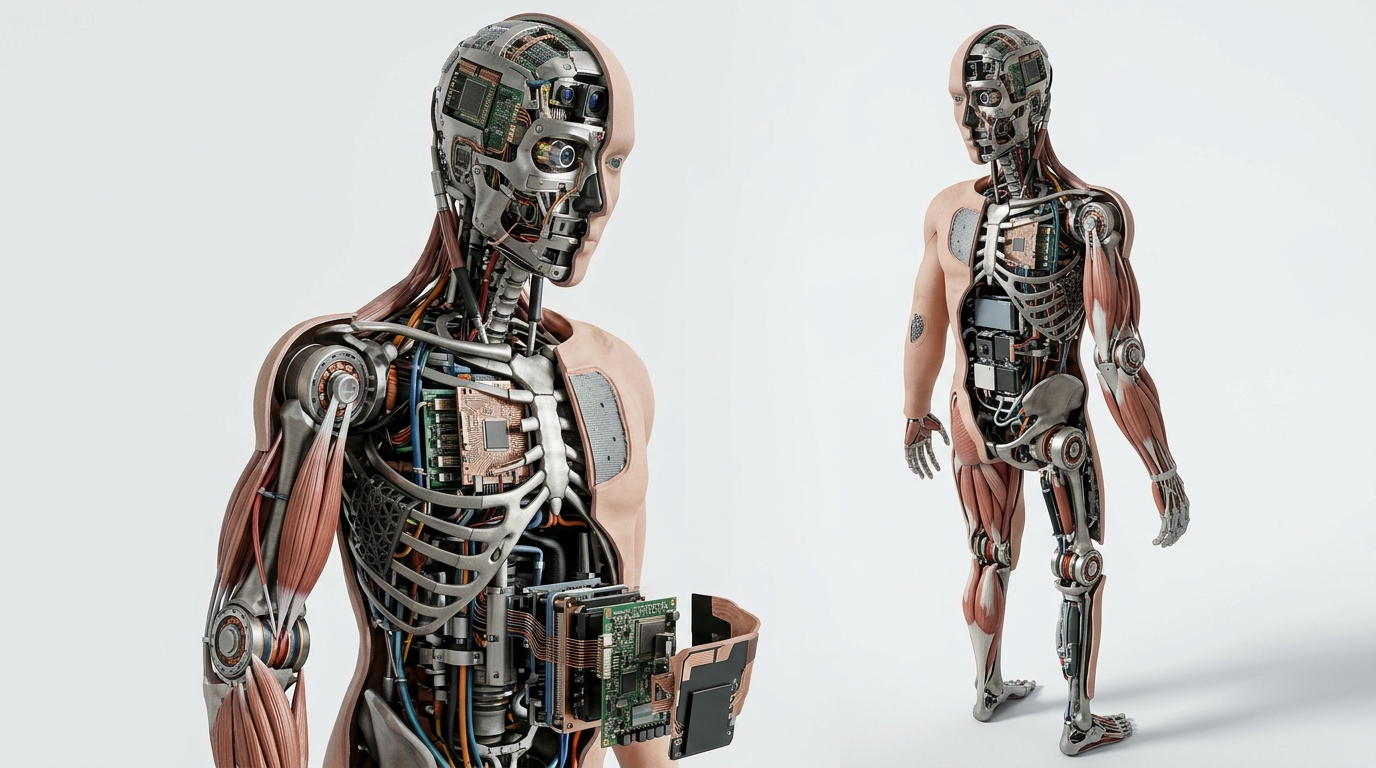
The Five-Layer GUNRA Architecture
The Model 7.3 dashboard organizes the physical and computational system into five principal layers:
| Layer | GUNRA Subsystem | Primary Function |
|---|---|---|
| 1. Logic Core | EverestQ Quantum Processor | Hybrid classical-quantum computation, task planning, and state simulation |
| 2. Motion Architecture | MagLev Active Joints | Friction-reduced 360° electromagnetic actuation and zero-wear bearings |
| 3. Agility Engine | Kinetic Agent Node | 500 Hz high-frequency dynamic balance, stabilization, and rapid motor correction |
| 4. Sensory Array | Multi-Spectral Suite | Multimodal environmental perception (Dual 16K RGB, LiDAR, Thermal IR) |
| 5. Exterior Interface | Bio-Hydrogel Dermis 2.0 | 800,000 tactile pressure pathways, 37°C thermal regulation, and facial micro-actuation |
Titanium–Graphene Structural System & Mechanics
The physical chassis described in the blueprint uses a lightweight titanium–graphene lattice combined with nanofiber-based artificial musculature. The structural engineering target is to achieve a 15× strength-to-weight ratio compared with human bone and support a conceptual 500 kg maximum lifting target.
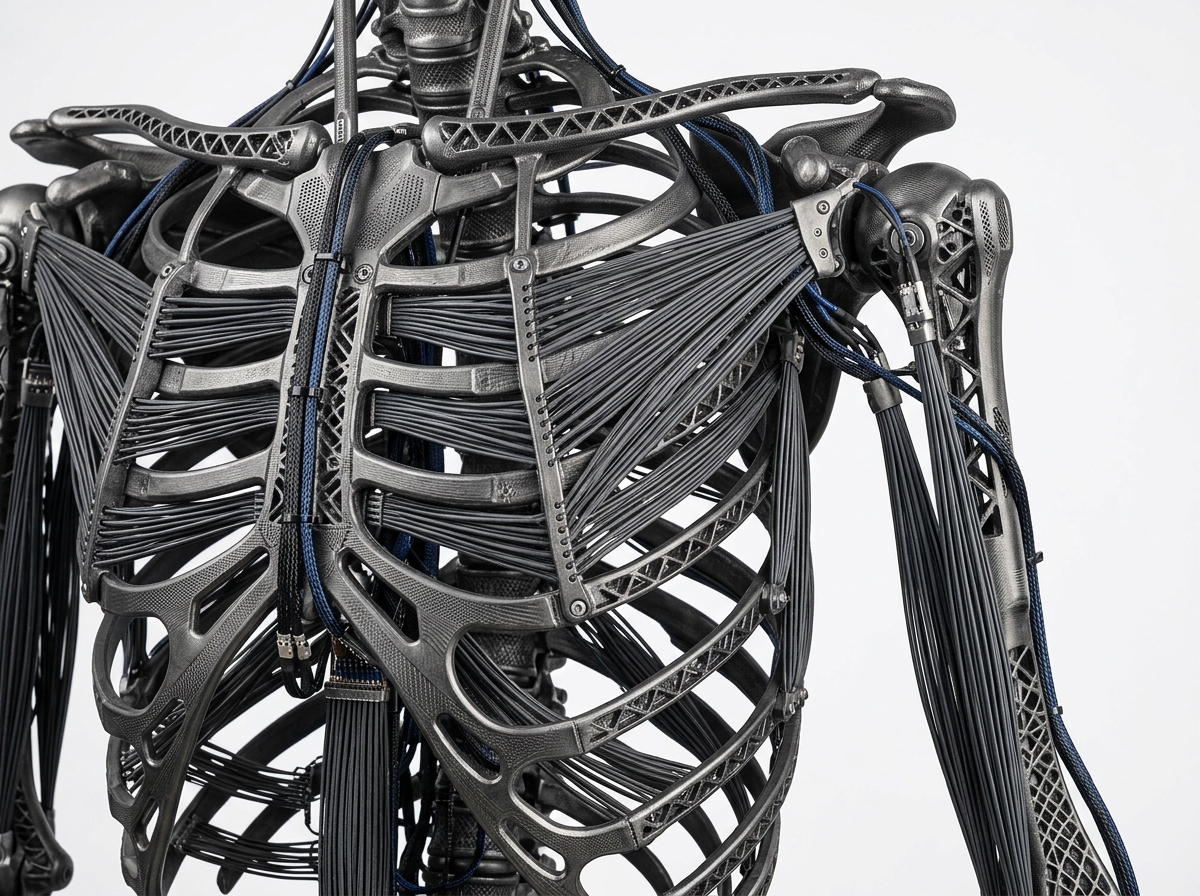
Structural Mechanics Formulation
Fundamental stress and bending relationships across load-bearing structural members:
Nanofiber Electro-Active Polymer Musculature
GUNRA's artificial muscles are conceptualized around 600+ individual electro-active polymer (EAP) bundles. When electrical stimulus is applied across conductive layers, the polymer matrices undergo controlled contraction and expansion.
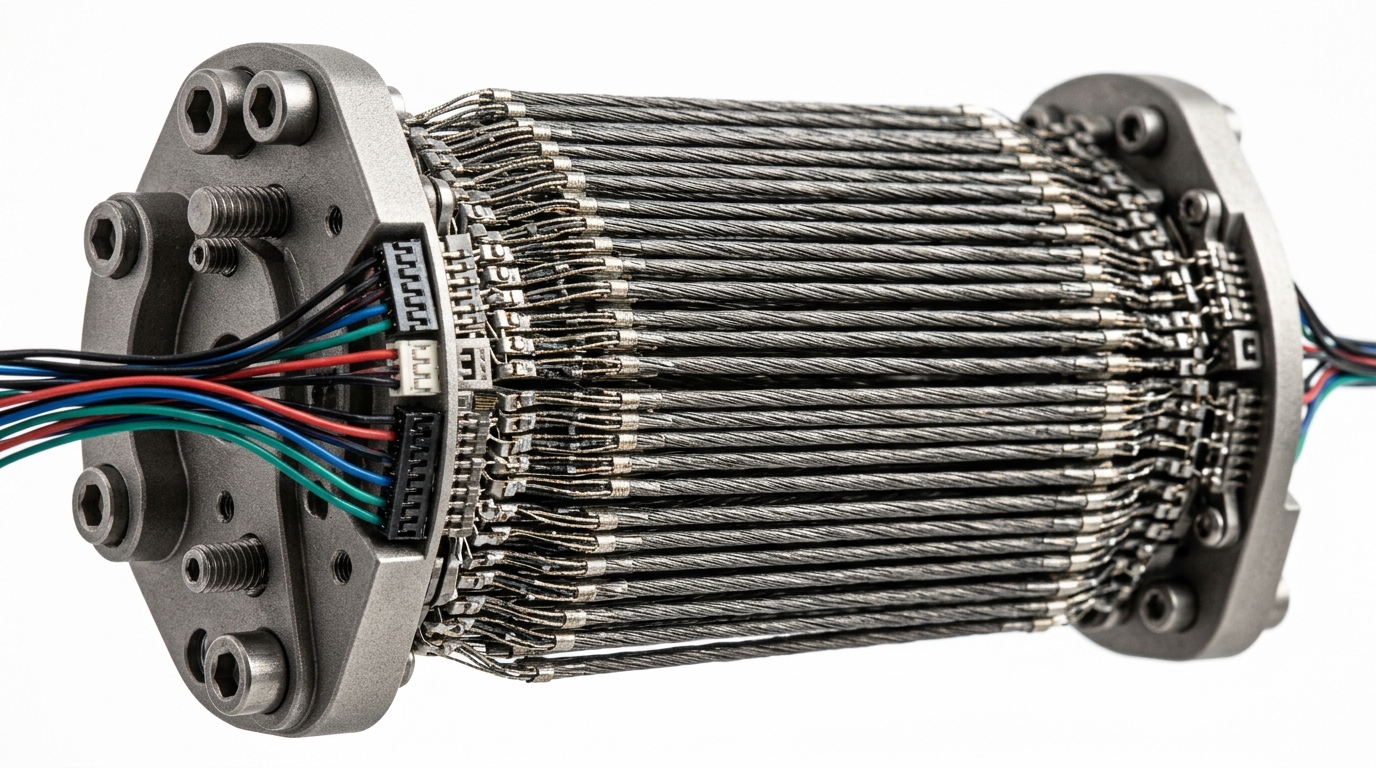
Individual fiber bundle forces aggregate dynamically based on applied voltage, duty cycle, thermal dissipation limits, and strain rate feedback.
Active Magnetic Levitation (MagLev) Joints
Instead of relying exclusively on conventional mechanical bearings that suffer from wear, friction, and thermal breakdown, GUNRA integrates Active Magnetic Levitation joints. An electromagnetic stator array suspends and drives a permanent-magnet rotor with controlled air gap clearance, providing 360° rotational freedom.
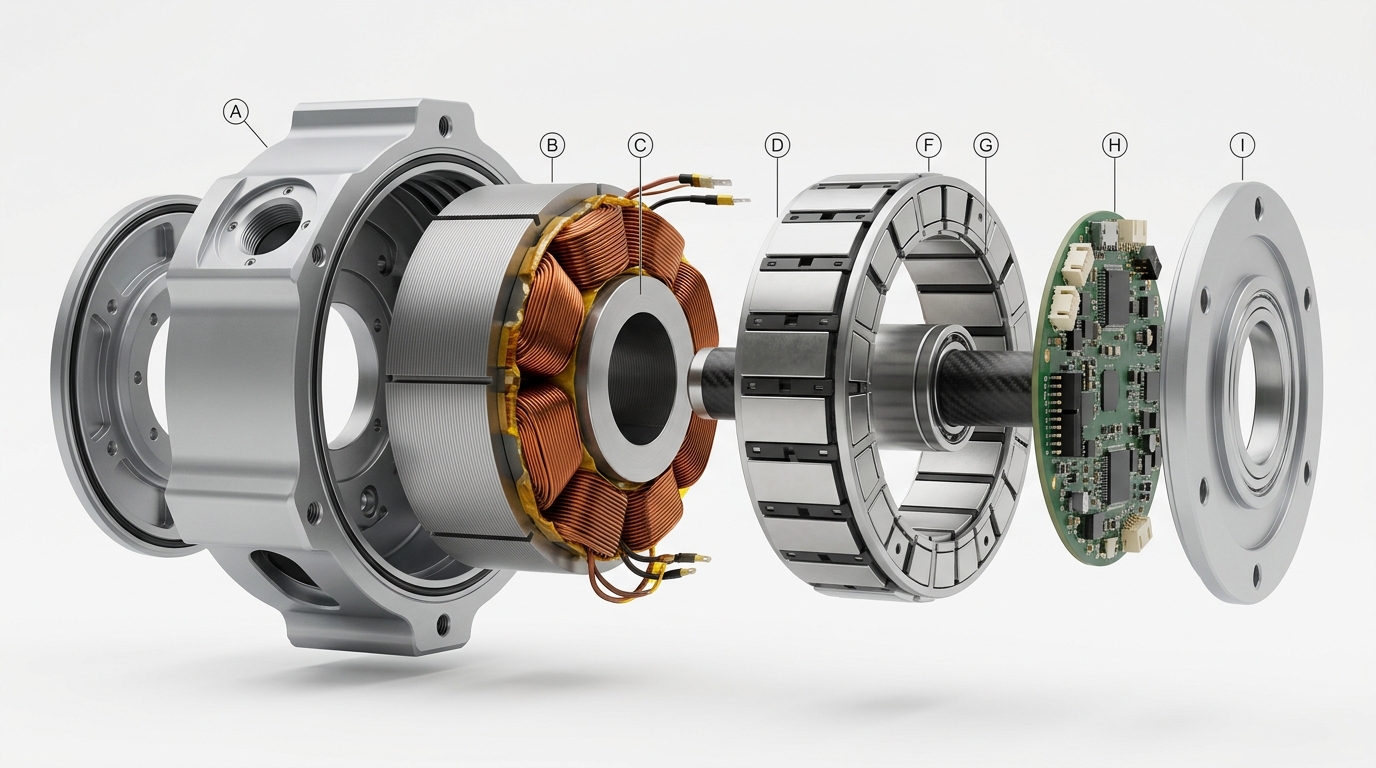
Electromagnetic torque is directly proportional to current input I and motor torque constant k_t, driving angular acceleration α = τ / J where J is rotational inertia.
Continuous feedback loops monitor angular error e(t) = θ_target - θ_actual and adjust stator coil excitation at sub-millisecond rates.
EverestQ Hybrid Quantum/Classical Logic Core
At the cognitive center of GUNRA is the EverestQ Quantum Brain architecture—a hybrid compute platform coupling high-throughput classical silicon (responsible for sensor acquisition, real-time motor signals, safety monitoring) with a conceptual 128-qubit quantum co-processor for rapid multi-dimensional trajectory optimization and real-time state simulation.
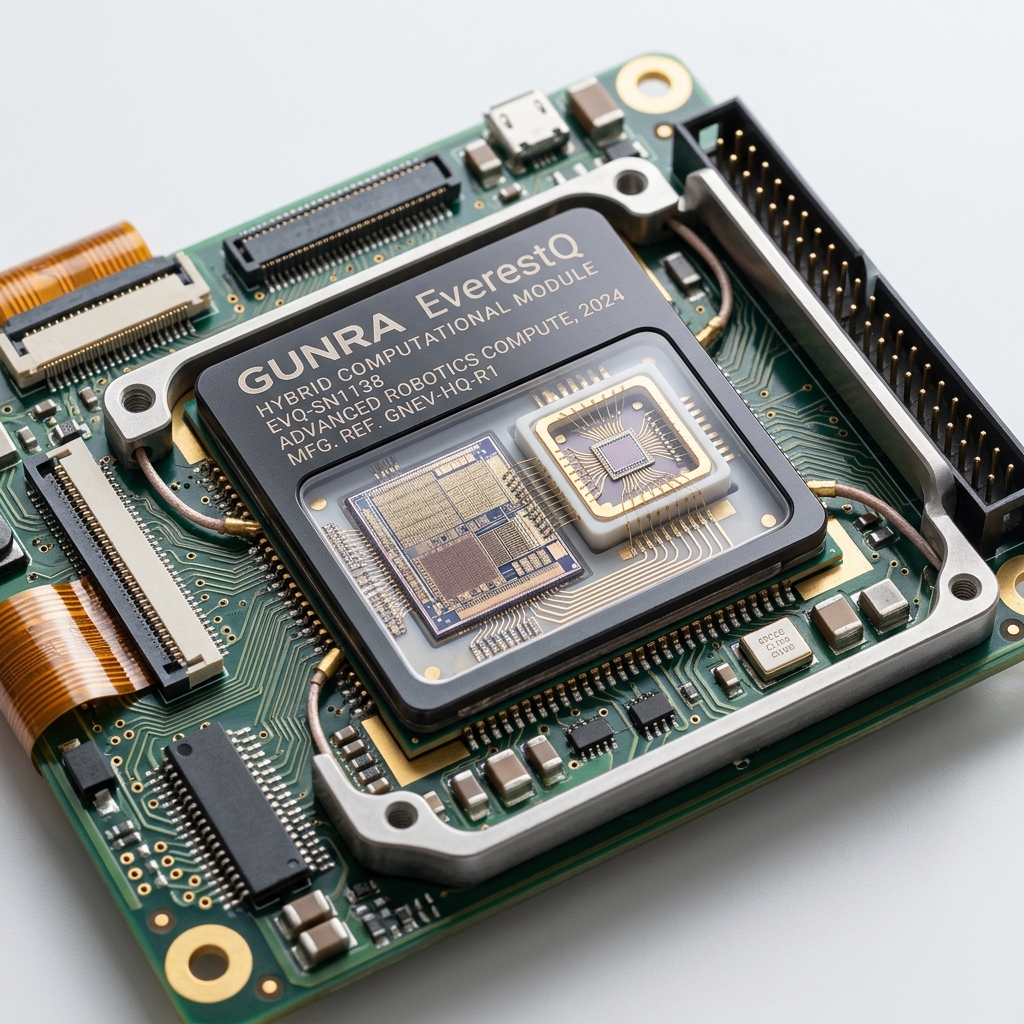
Architectural Note: Stated figures represent theoretical design targets within the Model 7.3 blueprint. Real-world quantum advantage depends on circuit depth, error correction, and problem mapping rather than raw state-space dimensions.
Specialized Multi-Agent Intelligence Family
GUNRA avoids monolithic AI bottlenecks by deploying a four-agent distributed intelligence hierarchy inspired by biological nervous systems:
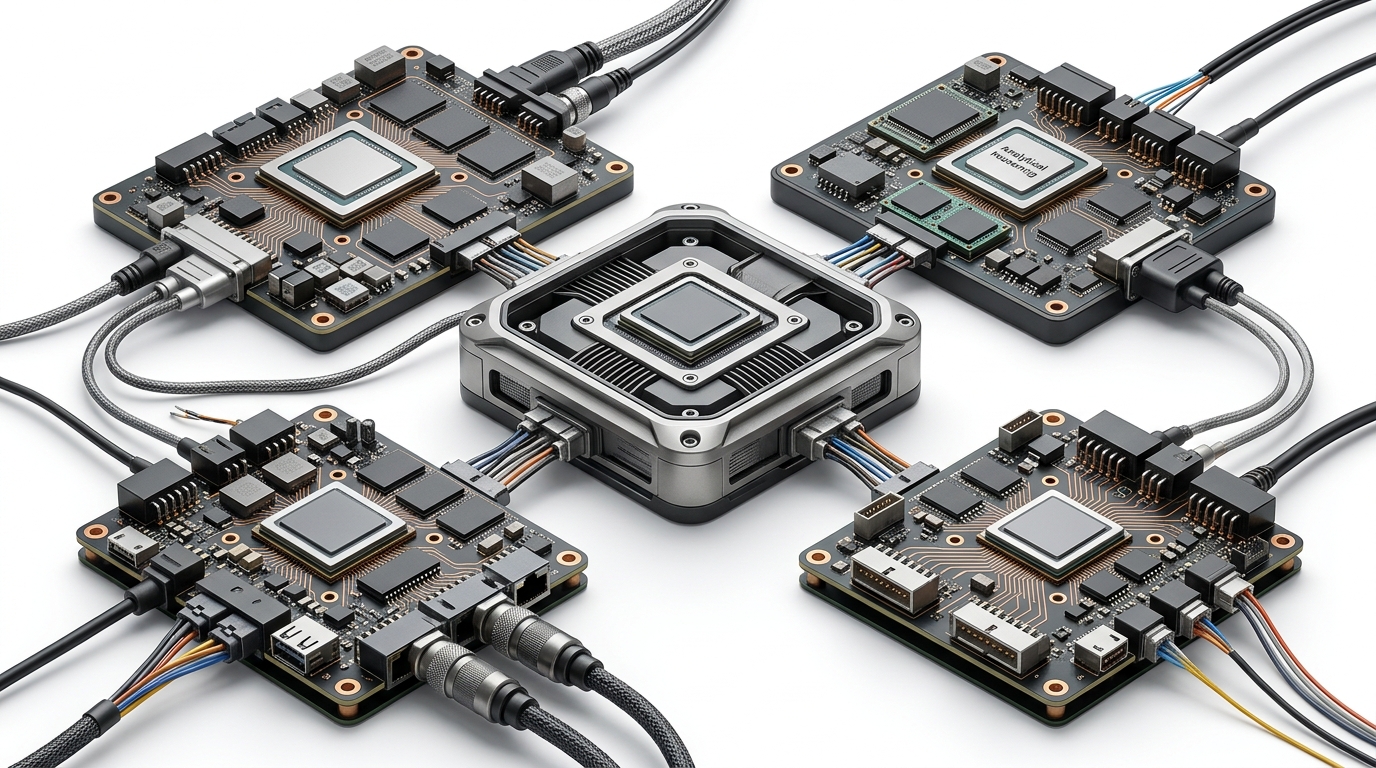
1. Sovereign Agent
Frontal Lobe ProxyNatural language dialogue, intent decomposition, high-level task scheduling, ethical validation, and user interface synthesis.
2. Analytical Agent
Parietal Lobe ProxyMathematical reasoning, spatial trajectory calculation, multi-objective optimization, obstacle avoidance, and code synthesis.
3. Kinetic Agent
Cerebellar Proxy500 Hz real-time balance correction, inverse kinematics, EAP muscle actuation signals, and gait stabilization.
4. Sentinel Agent
Supervisory Safety MonitorContinuous real-time safety gate, thermal regulation, torque limit enforcement, emergency stop triggers, and hardware diagnostics.
Multi-Spectral Sensory Suite & Sensor Fusion
Environmental perception relies on a fused sensory suite rather than optical cameras alone, ensuring robust operation in dark, dusty, or high-glare conditions:
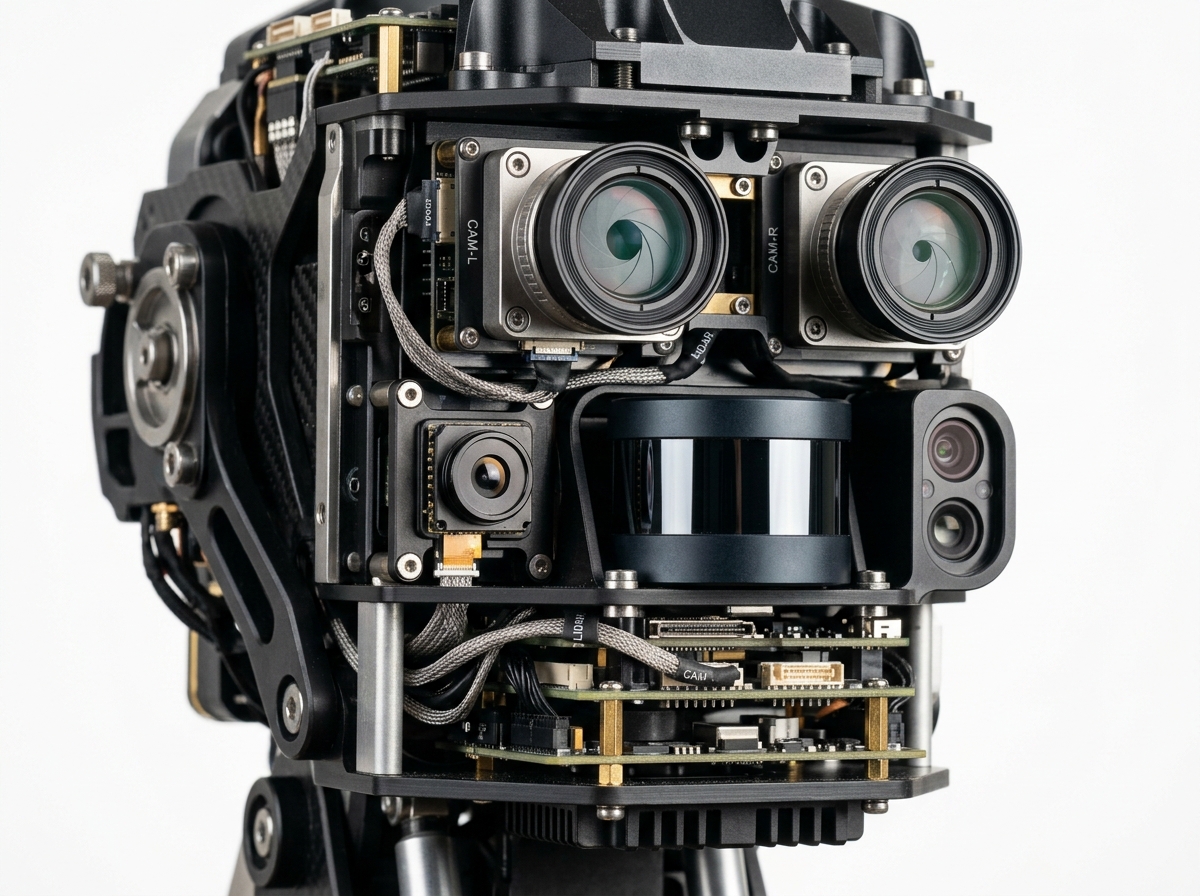
Measurements with lower uncertainty σ_i² carry higher weight in state estimation. Kalman filter updates continually synchronize 3D LiDAR point clouds P = {p_1, p_2, ..., p_n} with visual RGB feature tracks.
Synthetic Dermis 2.0 & Thermal Regulation
The exterior interface of GUNRA consists of a self-healing silicone-hydrogel membrane integrated with an 800,000 pressure-sensitive tactile pathway network, 52 micro-linear facial actuators, and embedded micro-heaters maintaining a nominal 37°C surface temperature.
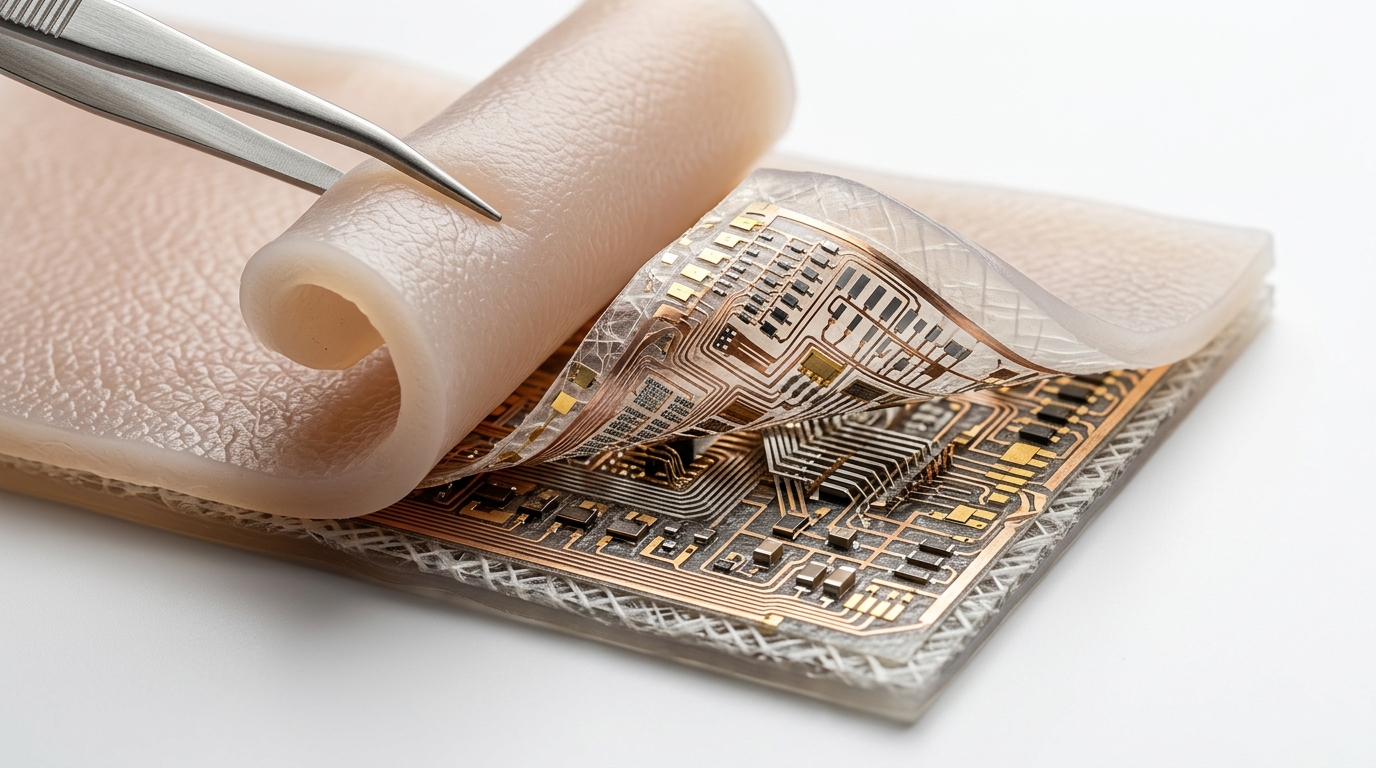
Balances convective and radiative environmental heat loss against internal electronics heat dissipation to stabilize surface temperature at T_s = 37°C.
High-Density Energy Storage & Kinetic Energy Recovery (KERS)
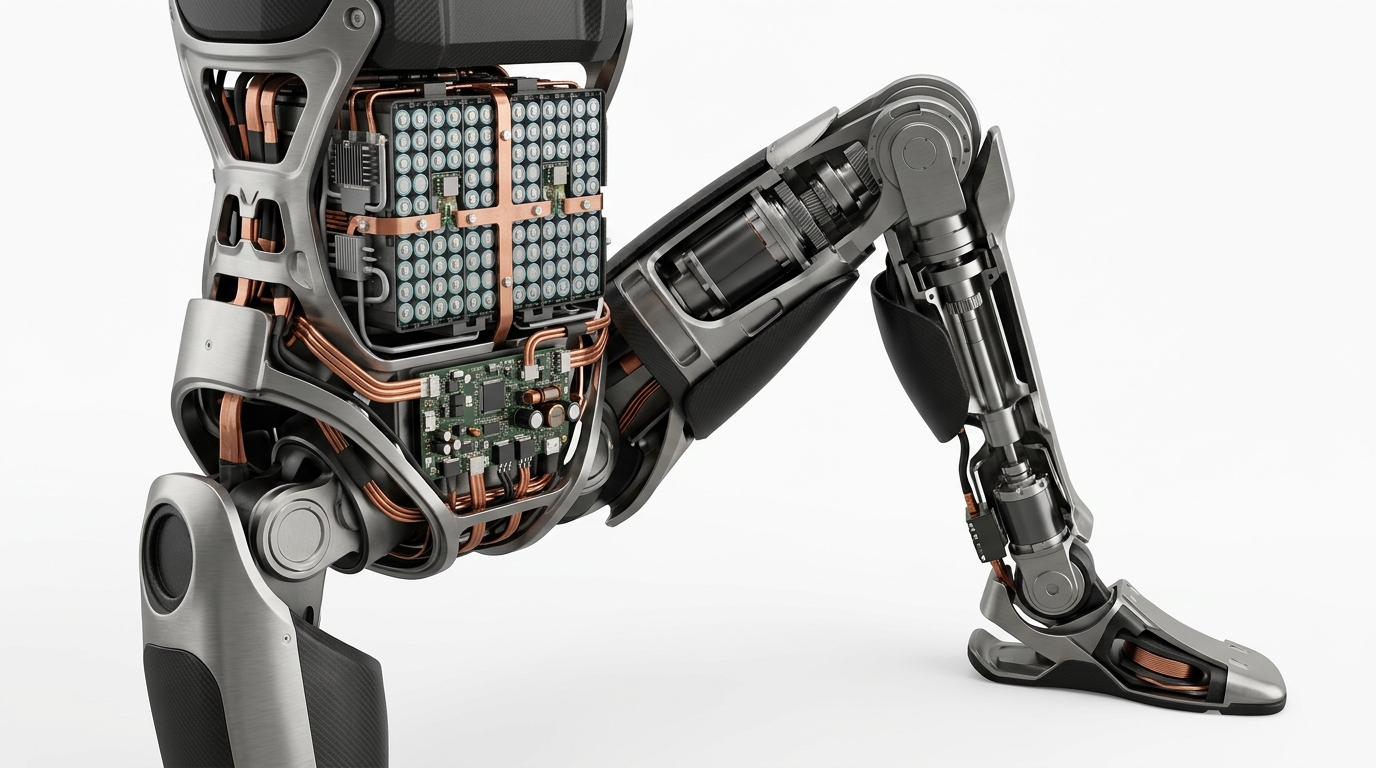
The energy system integrates 7.2 kWh high-density storage, spatial inductive charging (50 cm range), and a Kinetic Energy Recovery System (KERS) targeting 15 W of regenerated electrical power per stride during walking and deceleration.
The A-to-Z Closed-Loop Embodied AI Pathway
Natural language commands undergo multi-stage decomposition into structured task graphs, kinematic trajectories, and verified motor actions:
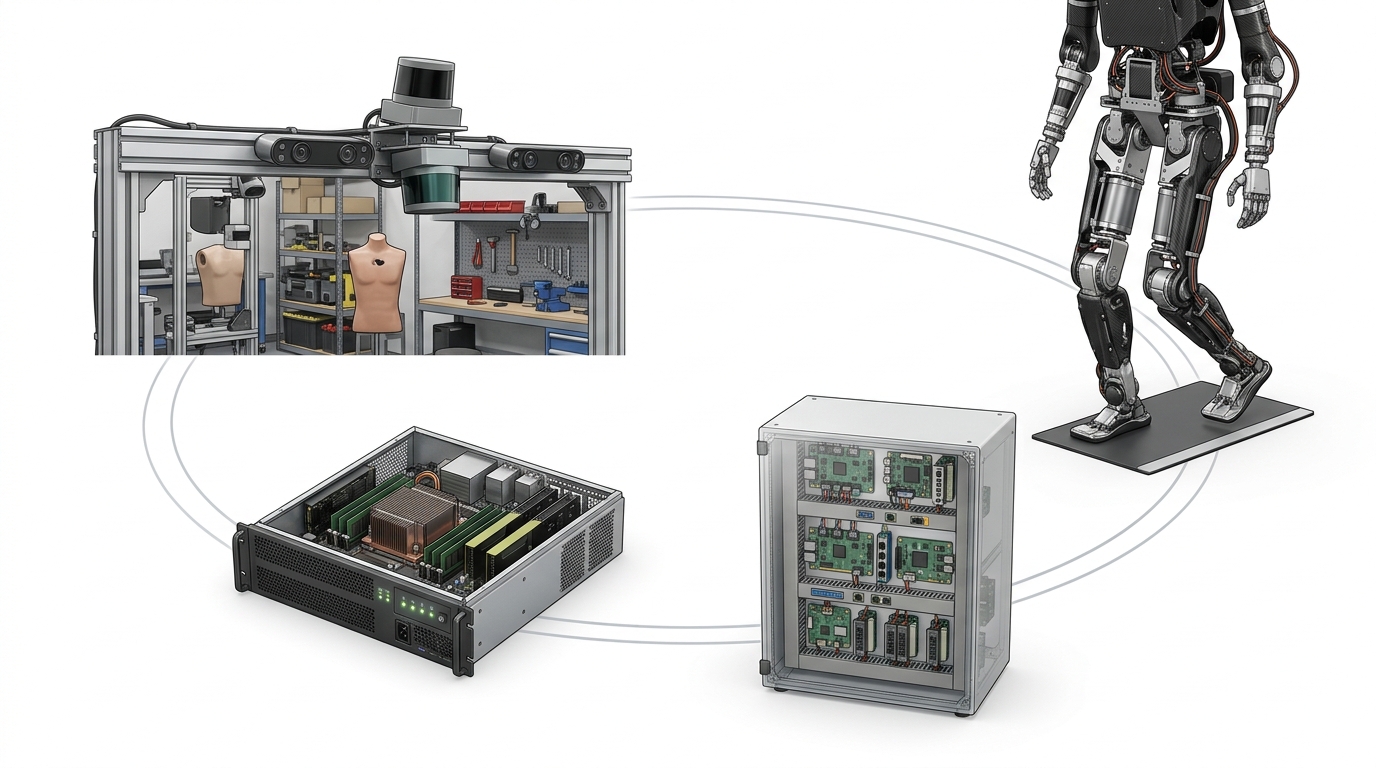
Observations o_t estimate state ŝ_t. The reasoning policy generates candidate action a_t for goal g. Execution changes physical state x_(t+1), yielding subsequent observation o_(t+1).
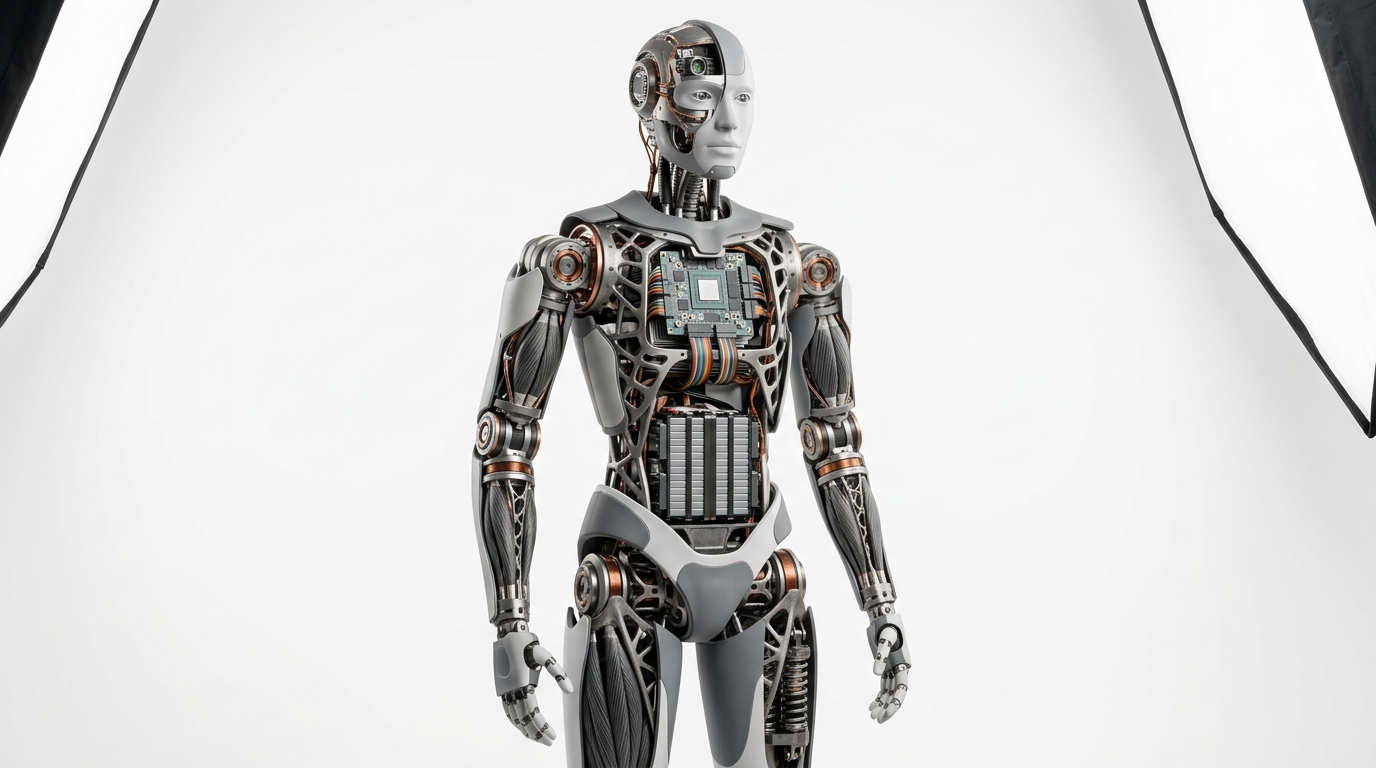
GUNRA as a Unified Cyber-Physical System
GUNRA couples deterministic physical constraints with generative computational capabilities. The Sentinel safety gate enforces strict boundary limits before any motor command is executed.
GUNRA Technical Specifications — Model 7.3
The following metrics represent Model 7.3 architectural design specifications and research targets:
| Subsystem | Model 7.3 Specification Target | Engineering Verification Mode |
|---|---|---|
| Structural Material | Titanium–Graphene Lattice | FEA Simulation & Coupon Testing |
| Strength-to-Weight Ratio | 15× Human Bone Equivalent | Design Target |
| Maximum Lifting Payload | 500 kg (Target Limit) | Actuator Simulation |
| Artificial Musculature | 600+ Electro-Active Polymer Bundles | Testbed Benchmarks |
| Joint Architecture | Active Magnetic Levitation (360°) | Electromagnetic Rig Prototype |
| Compute Core | EverestQ Hybrid Silicon / 128-Qubit | Hardware Emulation / Co-processor |
| Balance Correction Loop | 500 Hz (2 ms Interval) | Real-Time Kernel Validated |
| Sensory Array | Dual 16K RGB + Solid-State LiDAR + IR | Optical Bench Calibration |
| Tactile Surface Network | 800,000 Pressure Sensing Pathways | Matrix Readout Testbed |
| Energy Storage & KERS | 7.2 kWh Battery + 15 W/stride KERS | Power Bus Simulation |
From Conceptual Architecture to Physical Reality
GUNRA is developed incrementally to validate each subsystem independently prior to full-body integration:
Digital Twin & Simulation
Rigid-body dynamics, electromagnetic modeling, and RL training environments.
Single Joint MagLev Prototype
Active magnetic bearing test rig, stator winding validation, and PID controller tuning.
EAP Muscle Testbed
Polymer strain measurement, high-voltage switching, and fatigue life cycling.
Sensor Fusion Module
LiDAR-camera calibration, spatial occupancy mapping, and edge AI inference.
Single Limb Assembly
Coordinated joint movement, payload testing, and inverse kinematics validation.
Bipedal Lower Body
Dynamic walking gait, 500 Hz balance stabilization, and KERS recovery tests.
Full-Body Humanoid
Complete chassis assembly with EverestQ logic core and distributed agents.
Embodied AI Integration
End-to-end natural language reasoning, task execution, and human interaction.
Final Research Perspective
GUNRA is an exploration of what happens when artificial intelligence is designed as an embodied system rather than a purely digital model. The Model 7.3 architecture connects language, perception, reasoning, coordination, physical action, and sensory feedback into a unified, continuous cyber-physical organism.