Blyx: Rethinking What a Programming Language Should Be in the Age of AI
What If Programming Languages Were Designed for AI From Day One?

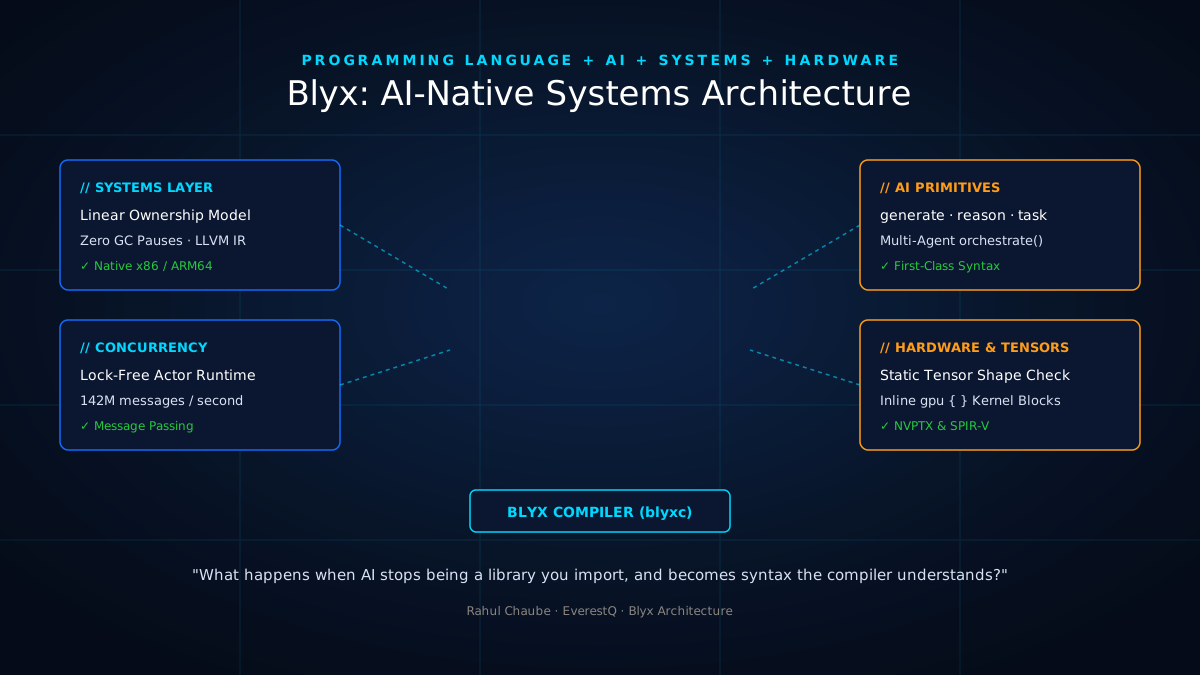

The Blyx programming language — where AI is syntax, not an external library.
For decades, programming languages have evolved around a relatively stable idea:
Humans write instructions. Computers execute them.
C gave us low-level control and performance.
C++ brought abstraction to systems programming.
Java introduced portability and a managed runtime.
Python made programming dramatically more accessible and became the dominant language for data science and machine learning.
JavaScript became the language of the web.
Rust pushed systems programming toward memory safety without sacrificing native performance.
But artificial intelligence has changed the way software is built.
Modern applications are no longer composed only of deterministic functions written entirely by humans. They increasingly contain language models, inference pipelines, agents, embeddings, tensors, GPU workloads, tool calls, autonomous tasks, and multi-agent systems.
Yet we still build most of these systems using languages whose original abstractions were not designed around AI.
That raises an interesting question:
What would a programming language look like if AI were treated as a first-class computational primitive rather than an external library?
This is the idea behind Blyx.
Blyx is an open-source, AI-native systems programming language designed to combine systems-level performance and safety with primitives for building intelligent software. The project describes itself as a language for building “fast, safe, and intelligent software.”
And that makes Blyx interesting for a reason that goes beyond syntax. It represents an attempt to rethink the boundary between programming, systems engineering, and artificial intelligence.
The Problem With Today's AI Software Stack
AI development today is powerful, but the software stack is fragmented.
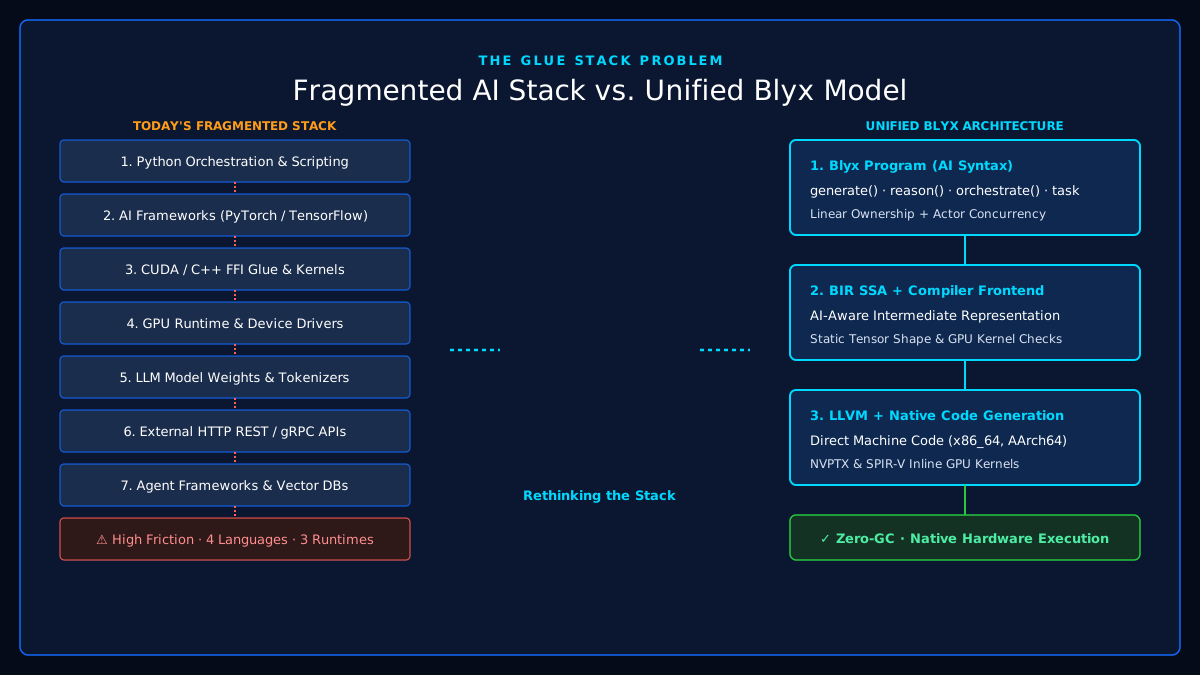
The fragmented AI stack problem: high friction across multiple languages and runtimes.
A typical AI application might look something like this:
Then another layer is added for agents:
This works. But it also creates a significant abstraction problem. The language used to express the application does not necessarily understand the computation being performed.
For example, the programmer might write:
response = model.generate(prompt)From Python's perspective, this is simply a function call. But semantically, something much more complex happened:
The programming language itself has almost no knowledge of those semantics. AI is essentially treated as an external service or library.
Blyx explores a different approach: What if AI operations were language primitives?
Introducing Blyx
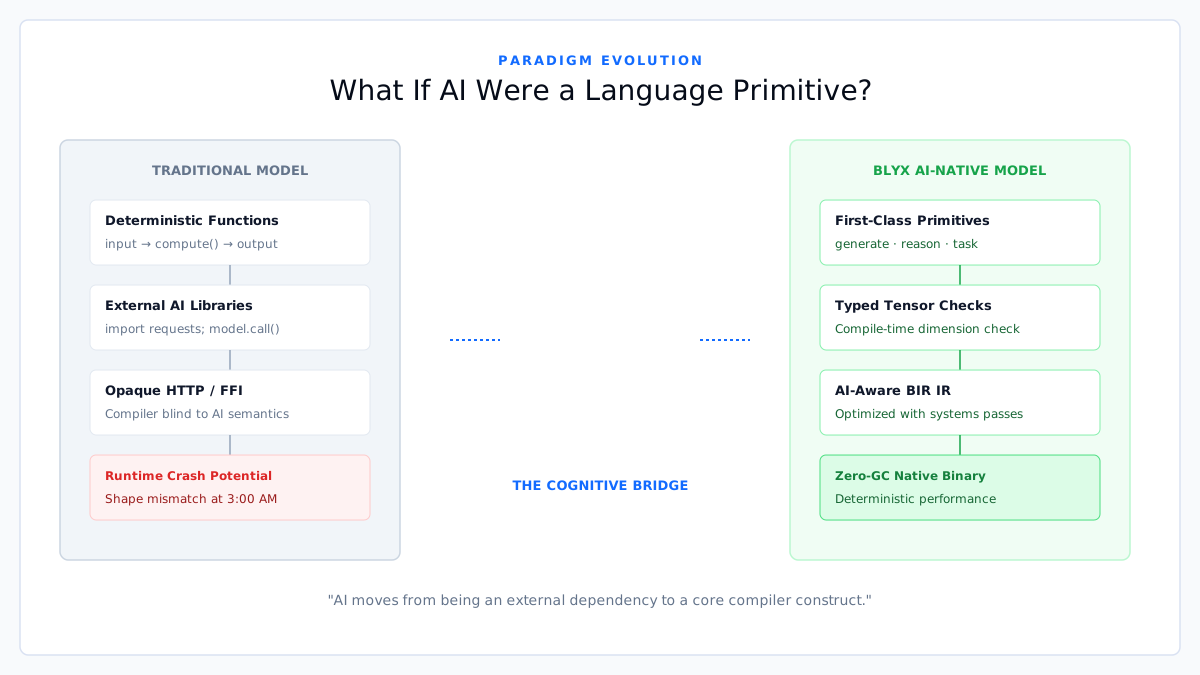
Transitioning from external AI libraries to first-class compiler primitives.
Blyx is designed as an AI-native systems programming language. The current alpha implementation combines several key ideas:
- Static typing
- Ownership and borrowing
- Lifetime checking
- Native compilation via LLVM
- BIR SSA intermediate representation
- Zero garbage collection
- Actor-based concurrency
- Static tensor types
- GPU compute support
- AI-oriented language primitives
- Package management (
blyxpkg) - Language Server Protocol tooling (
blyx-analyzer)
The project's compiler and runtime are built in Rust, while Blyx programs are lowered through its BIR SSA representation toward LLVM and native machine code.
The goal is ambitious: Bring AI abstractions closer to the language and systems abstractions closer to AI.
AI as a Language Primitive
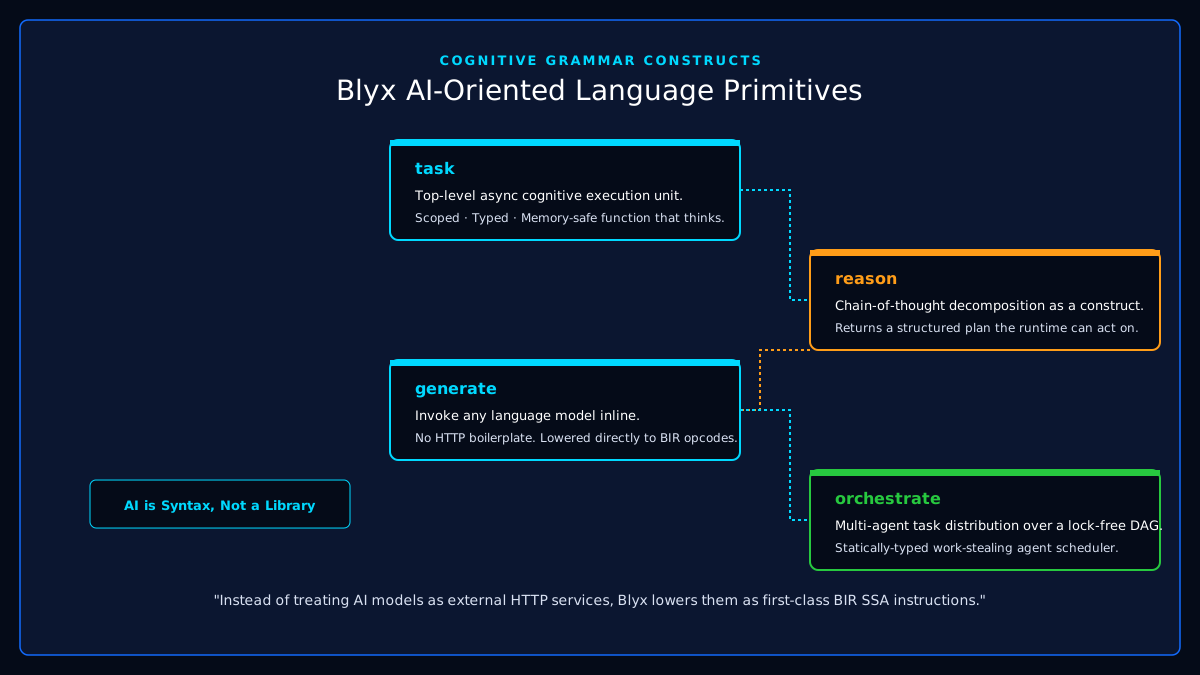
First-class cognitive constructs: generate, reason, orchestrate, task.
One of the most interesting parts of Blyx is its AI-oriented syntax. The language introduces primitives such as:
Instead of treating an AI model as just another HTTP API or library function, Blyx attempts to represent AI computation directly in the language.
For example, the project currently demonstrates code conceptually like:
task synthesize_report(context: str) -> str {
    let model = "gpt-4o";
    let thoughts = reason(context);
    let report = generate(model, thoughts);
    return report;
}
This is a fundamentally different programming model. The programmer is expressing an intelligent task, not merely calling a conventional function. The Blyx website describes generate() and reason() as first-class AI primitives that are lowered into its BIR SSA representation.
From Functions to Intelligent Tasks
Traditional programming often looks like this:
AI applications increasingly look like:
Blyx introduces the idea that the second model should become easier to express at the programming-language level. For example:
task analyze(data: Dataset) -> Report {
    let insight = reason(data);
    let report = generate("analyst-model", insight);
    return report;
}
The important idea isn't the syntax itself. The important idea is semantic integration. A future AI-native compiler could potentially understand that an operation involves:
inference, tensors, GPU computation, asynchronous execution, model resources, concurrency, memory, and orchestration.
That opens a much larger design space than simply creating another AI SDK.
Why Systems Programming Matters
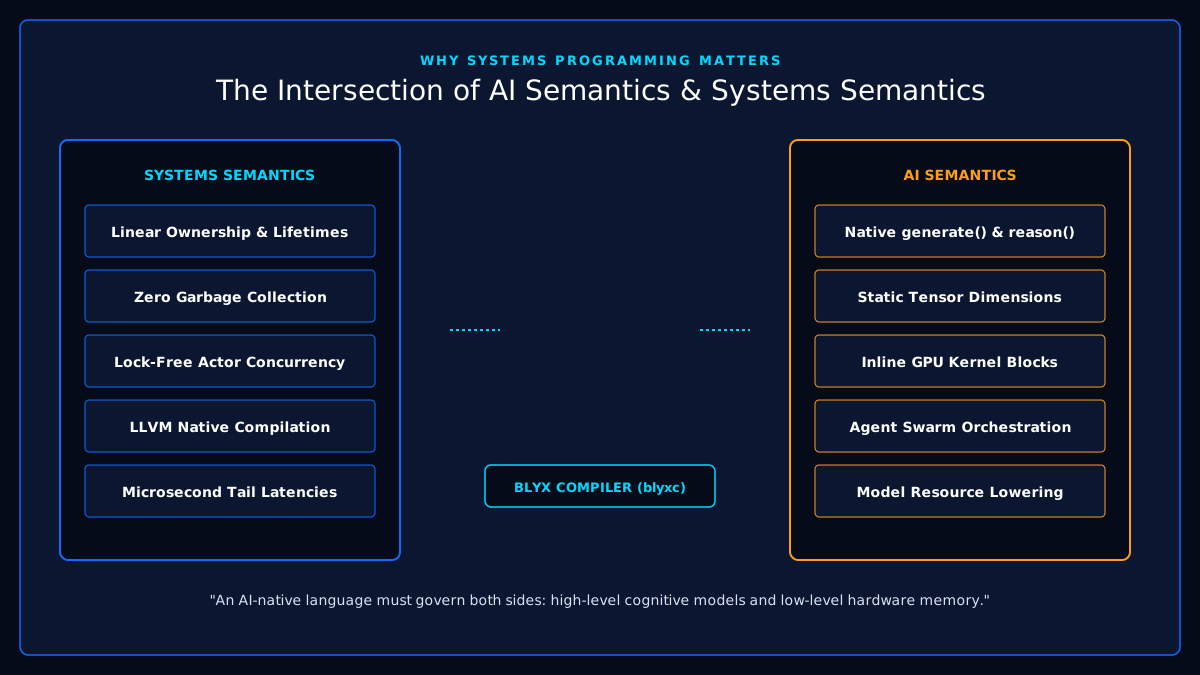
Unifying high-level cognitive models with low-level systems execution.
If Blyx were only an AI language, it would be competing with Python frameworks. But Blyx is attempting something different. It is positioned as a systems language as well.
The project uses ownership, borrowing, lifetimes, static type checking, native compilation and zero garbage collection as part of its systems-level design.
This matters because AI systems increasingly need serious infrastructure:
- inference servers
- model runtimes
- vector databases
- GPU schedulers
- distributed agents
- edge AI & robotics
- autonomous systems
- high-performance data processing
- real-time inference microservices
These workloads cannot always rely on high-level abstractions alone. Eventually, developers care about:
Memory · CPU · GPU · Latency · Concurrency · Bandwidth · Synchronization · Cache behavior · Binary size · Power consumption
Memory Safety Without Garbage Collection
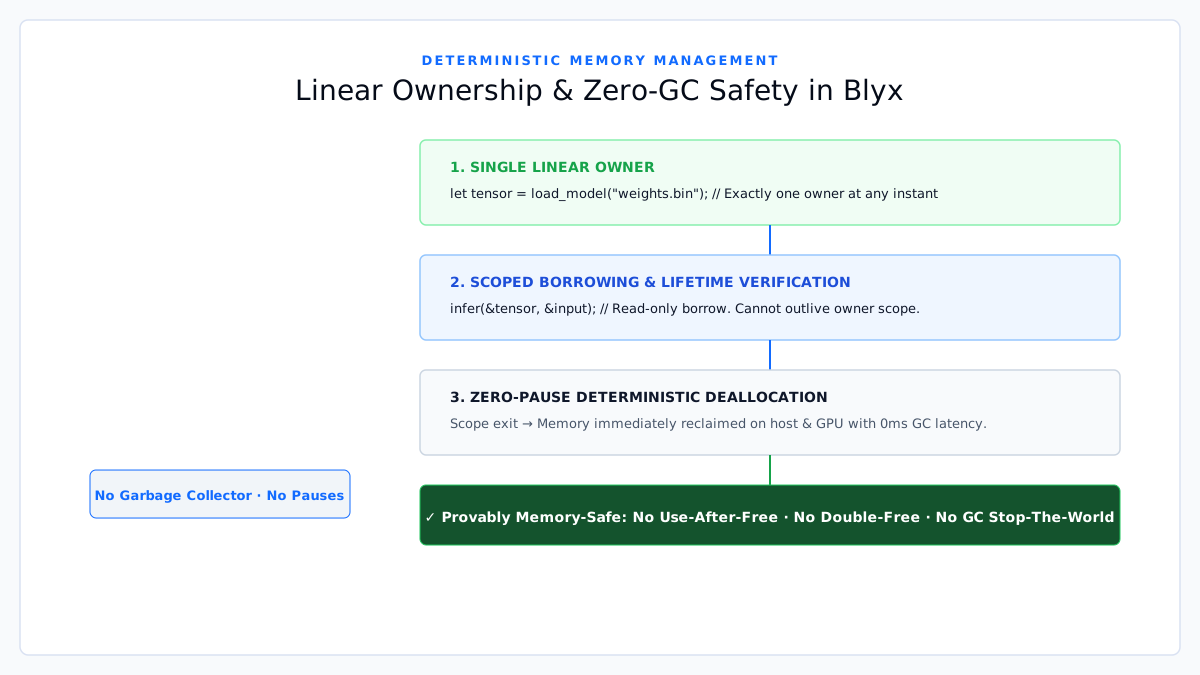
Deterministic linear ownership eliminating garbage collection stop-the-world pauses.
One of the major challenges in systems programming is memory management. Languages such as C and C++ provide tremendous control, but that control also creates opportunities for:
- use-after-free
- double-free
- null pointer dereferences
- buffer overflows
- data races & memory leaks
Garbage-collected languages solve a different part of the problem, but introduce runtime memory-management overhead and pauses that can be undesirable for some systems workloads.
Rust demonstrated that ownership and borrowing can provide a strong compile-time safety model without requiring a traditional garbage collector. Blyx adopts a similar systems philosophy.
Imagine a language where this:
let tensor = load_model();is not merely a high-level object allocation. The compiler could potentially reason about:
Static Tensor Types
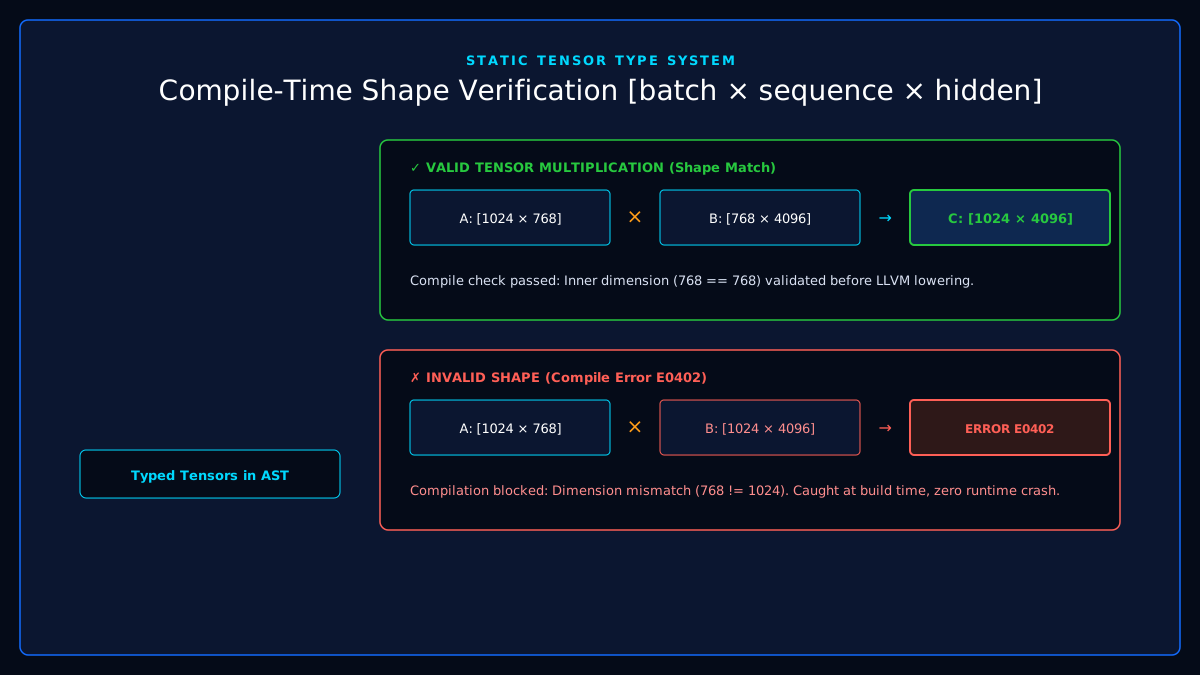
Compile-time dimension validation catching tensor mismatches before execution.
AI is fundamentally a tensor-processing domain. A model is not just manipulating strings. Underneath modern machine learning systems are:
Vectors · Matrices · Tensors · Attention · Convolutions · Embeddings · Activations · Gradients
A common source of errors in machine learning is shape mismatch. For example:
Matrix A: [1024 × 768] × Matrix B: [768 × 4096] → Valid
Matrix A: [1024 × 768] × Matrix B: [1024 × 4096] → Invalid (Error E0402)
Today, many of these errors are discovered during execution. An AI-native language can instead explore making tensor properties part of the type system:
let embeddings: Tensor[batch, sequence, 768];The compiler could then reason about dimensions before the program runs.
AI + GPU Programming
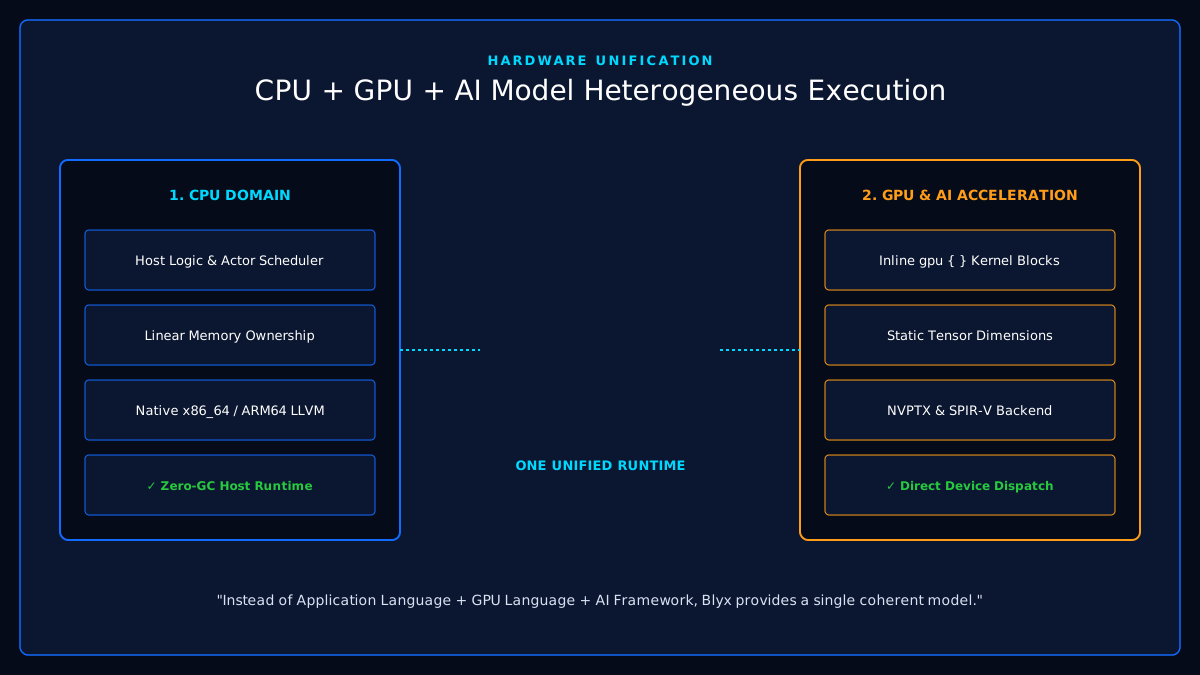
Bridging CPU host logic, inline GPU kernels, and AI models in a single language.
There is another major problem: AI software lives between multiple computational environments. A developer typically writes:
Blyx's documentation includes GPU compute blocks alongside static tensor types. Instead of thinking Application Language + GPU Language + AI Framework, the long-term vision becomes a unified compiler target for CPU, GPU, and AI model operations.
Actors Instead of Threads Everywhere
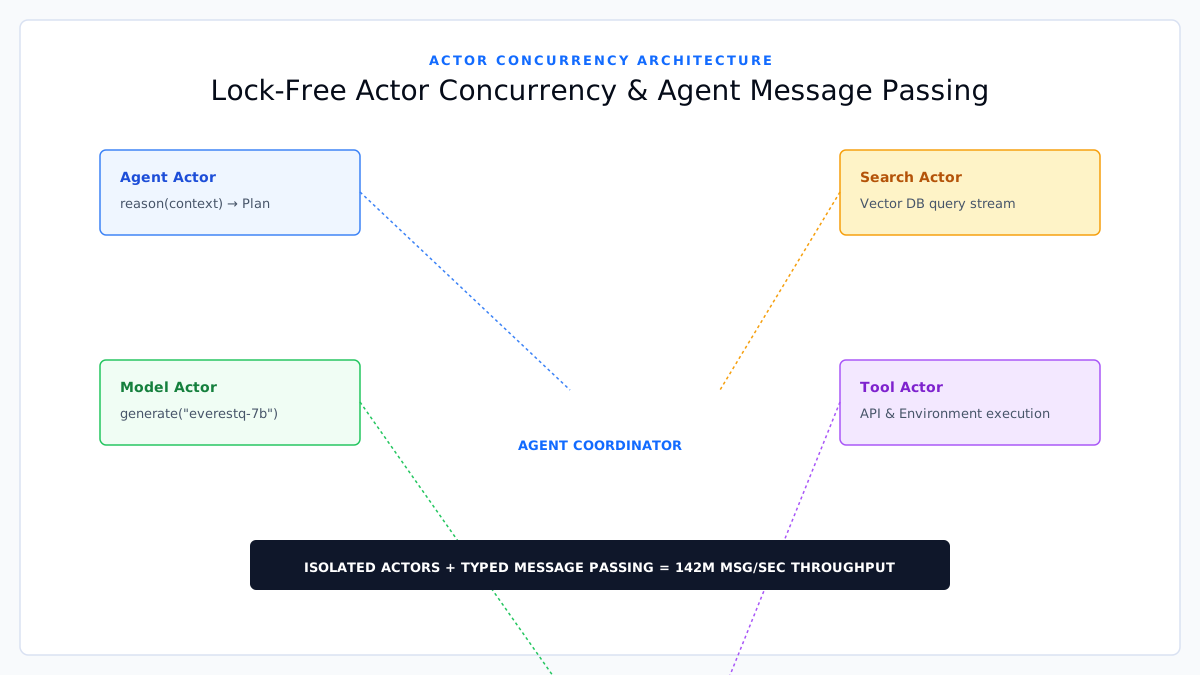
Lock-free actor concurrency enabling safe high-throughput message passing.
AI applications are increasingly asynchronous. Consider an AI agent simultaneously handling requests, calling models, searching vector databases, invoking tools, and evaluating outcomes.
Blyx uses an actor-oriented concurrency model. The actor model treats computation as independent entities communicating through messages rather than sharing mutable state everywhere. Blyx describes its actor runtime as lock-free and designed for high-throughput message passing (benchmarked at 142M messages/sec).
orchestrate: A Different Kind of Concurrency
Traditional programming gives us:
AI systems increasingly need something closer to:
For example, imagine an AI research workflow:
task research(topic: str) -> Report {
    let researcher = orchestrate("research-agent");
    let analyst    = orchestrate("analysis-agent");
    let writer     = orchestrate("writer-agent");

    let sources    = researcher.search(topic);
    let analysis   = analyst.analyze(sources);
    return writer.write(analysis);
}
The important architectural idea is that multi-agent behavior becomes part of the computational model rather than being implemented entirely through an external framework.
The Compiler Is Part of the Idea
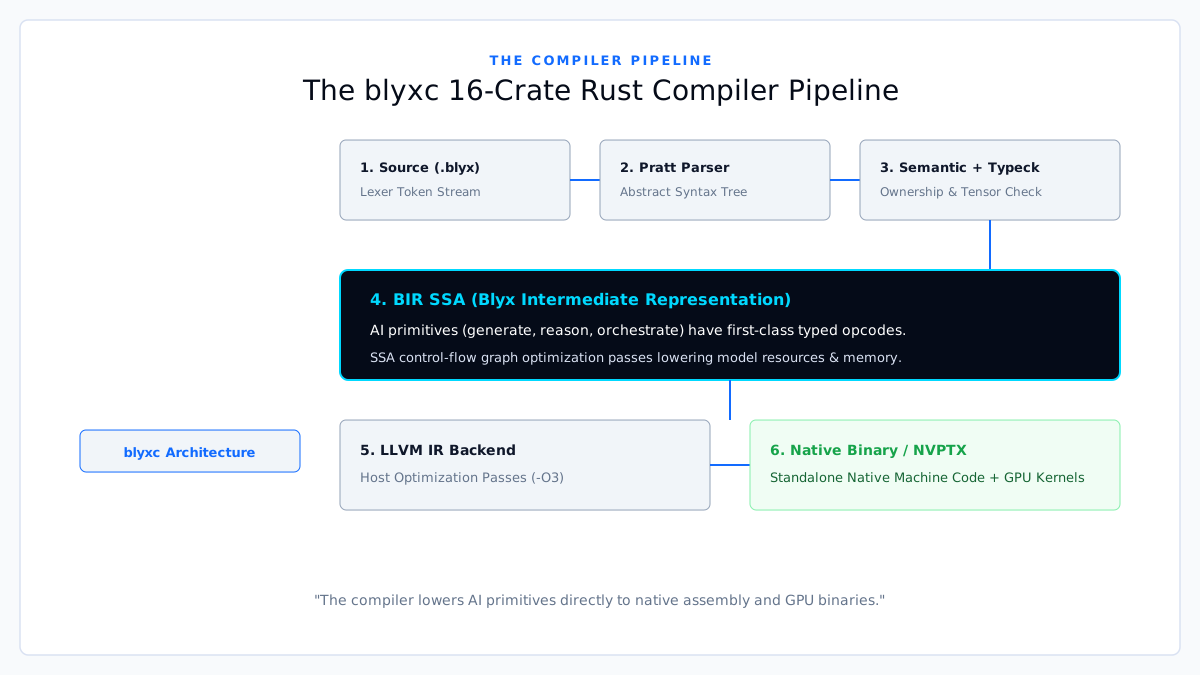
16 Rust crates lowering Blyx source code through BIR SSA to LLVM IR and machine code.
A programming language is not just syntax. The compiler determines what the language can actually do. Blyx currently describes a compiler pipeline:
The primary compiler driver is called blyxc. The project also includes blyxpkg (package manager), blyxfmt (formatter), and blyx-analyzer (language server tooling).
Why Build an Intermediate Representation?
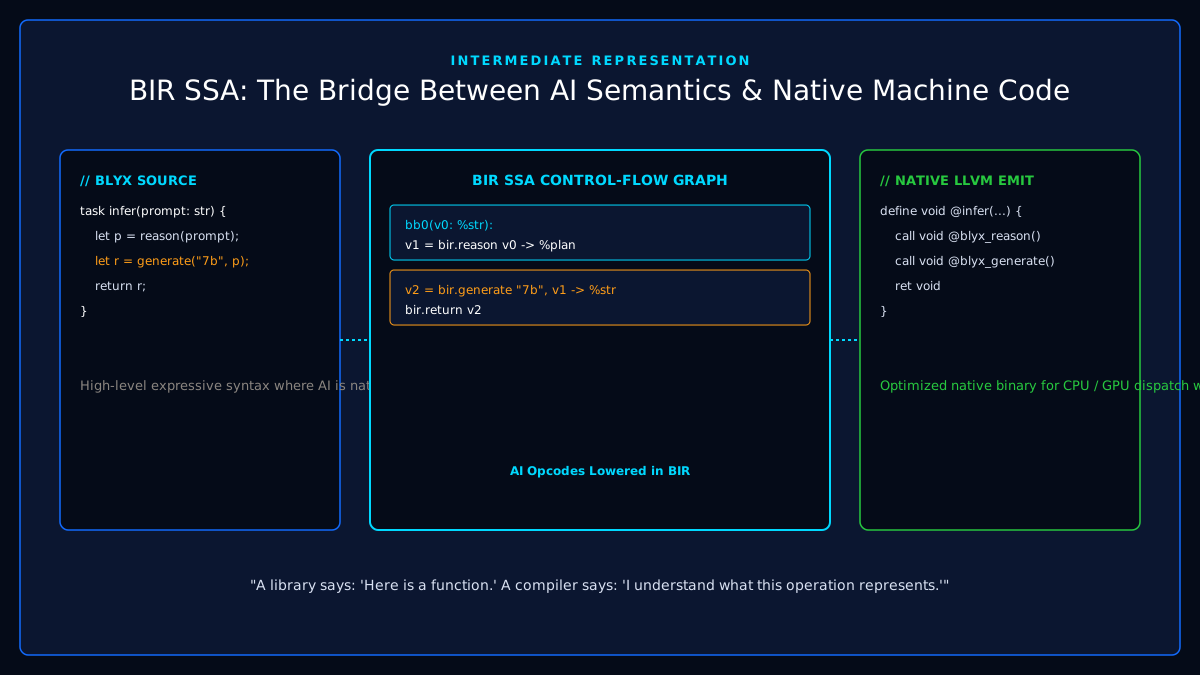
BIR SSA as the intermediate representation bridge between AI semantics and LLVM.
Compilers commonly use intermediate representations because they provide a structured bridge between source code and machine code. For Blyx, BIR SSA becomes an important layer allowing AI-specific operations (generate, reason, orchestrate) to participate in optimization passes alongside memory allocation and tensor kernels.
Blyx Is Not Trying to Replace Python Overnight
It is important to be realistic. Python has an enormous ecosystem (PyTorch, TensorFlow, NumPy, Jupyter, Hugging Face, millions of developers). A new language cannot simply declare itself a replacement.
A more realistic long-term architecture is:
Python can remain the premier research and experimentation language, while Blyx targets production infrastructure where developers need strict control over latency, memory, concurrency, and hardware deployment.
How Blyx Differs From Rust
Rust is one of the closest conceptual comparisons. Rust focuses heavily on memory safety, ownership, and performance. Blyx takes inspiration from that systems direction but adds another axis: AI-native computation.
| Area | Rust | Blyx |
|---|---|---|
| Native compilation | Yes | Yes |
| Ownership & Borrowing | Yes | Yes |
| Memory safety (Zero-GC) | Strong | Strong |
| Actor concurrency | Ecosystem (actix) | Language / runtime focus |
| Tensor types | Libraries (candle) | Language-level direction |
| GPU computing | Ecosystem / FFI | Inline gpu { } blocks |
| AI primitives | Libraries | First-class language syntax |
| LLM orchestration | Frameworks | Language primitive direction |
Performance: What Does the Current Data Say?
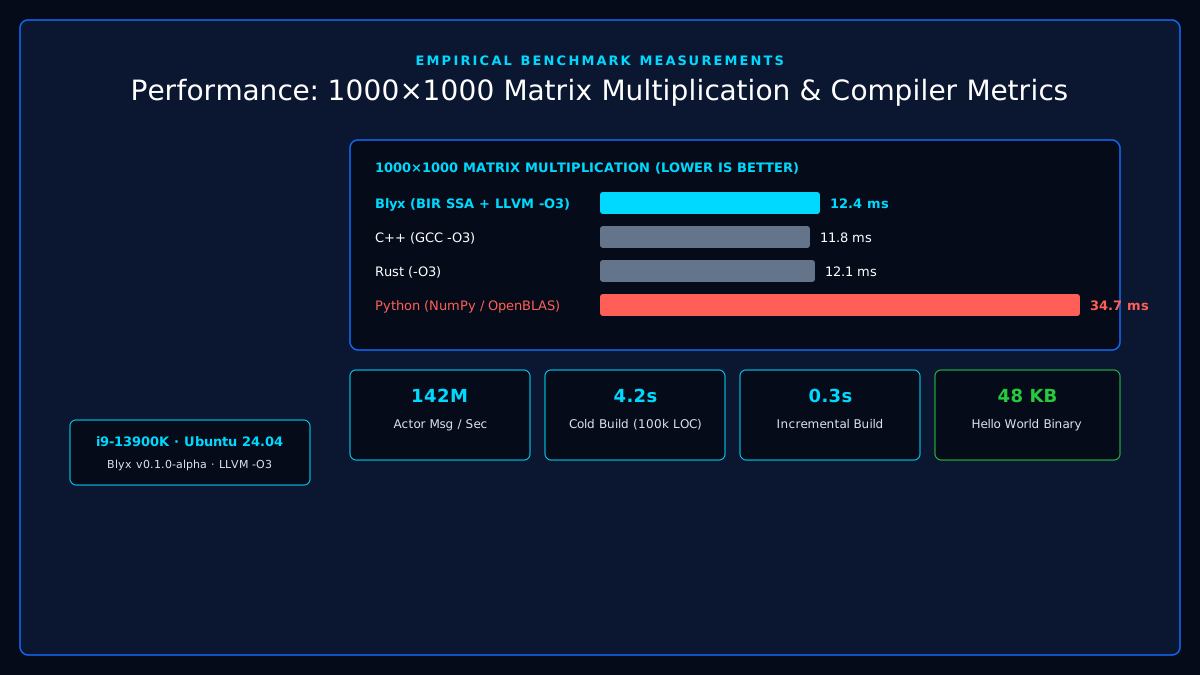
Empirical measurements on Intel Core i9-13900K, Ubuntu 24.04 (v0.1.0-alpha).
According to the project's reported measurements on an Intel Core i9-13900K system:
- 1000×1000 matrix multiplication: 12.4 ms (vs C++ GCC: 11.8 ms, Rust: 12.1 ms, Python NumPy: 34.7 ms)
- Actor throughput: 142 million messages/sec
- Cold build (100,000 LOC): 4.2 seconds
- Incremental build: 0.3 seconds
- Hello World binary: 48 KB
These numbers are interesting, but they should be interpreted carefully. The takeaway is not that Blyx is faster than everything, but that an AI-oriented language can achieve serious systems-level performance.
The Bigger Problem: AI Is Becoming a Systems Problem
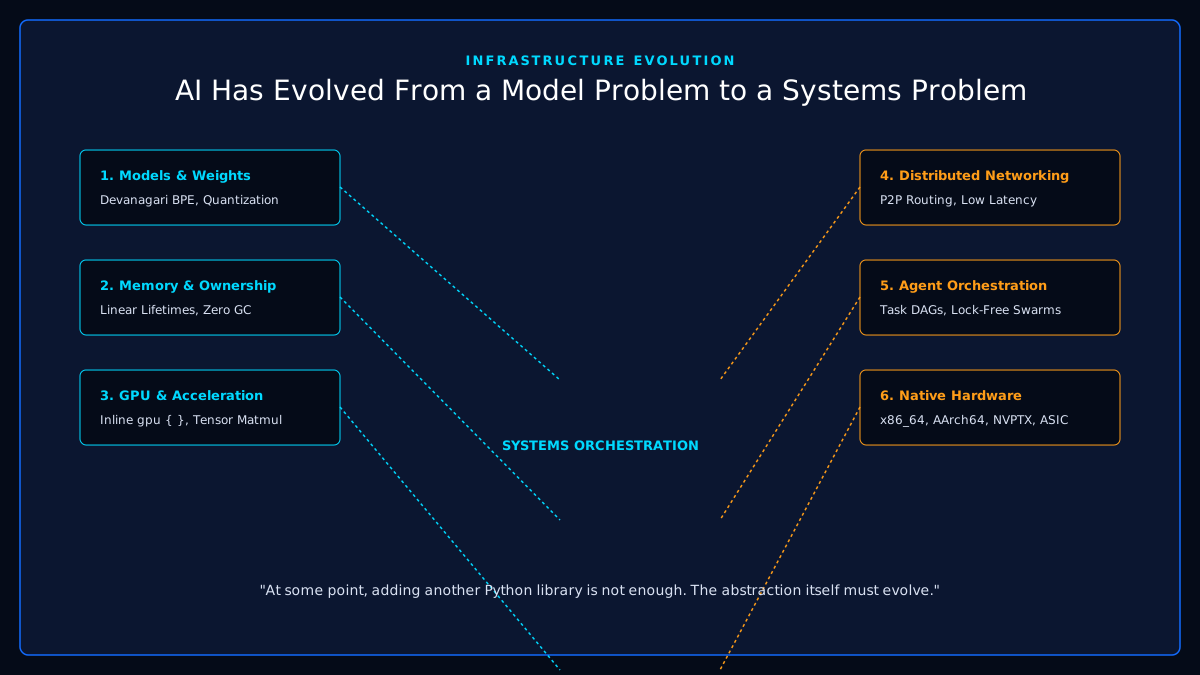
AI evolved from a model problem to a systems and infrastructure problem.
AI started primarily as a model problem. Then it became a data problem. Then a compute problem. Now it is increasingly a systems problem. Modern AI infrastructure requires:
Models + Data + Memory + GPU + Networking + Distributed systems + Concurrency + Agents + Inference + Security + Hardware
At some point, simply adding another Python library is not enough. The abstraction itself must evolve.
What Could an AI-Native Programming Language Eventually Enable?
The possibilities extend far beyond chatbots:
// 1. Autonomous AI Agents
task autonomous_agent(goal: str) {
    let plan = reason(goal);
    orchestrate(tools, plan);
}
// 2. Typed Tensor Programs
let x: Tensor[batch, sequence, hidden];
// 3. Inline GPU Computation
gpu { compute(x); }// 4. Concurrent AI Microservices
actor ModelServer {
    fn receive(&mut self, request: Req) {
        generate(request);
    }
}
From AI Libraries to AI Languages
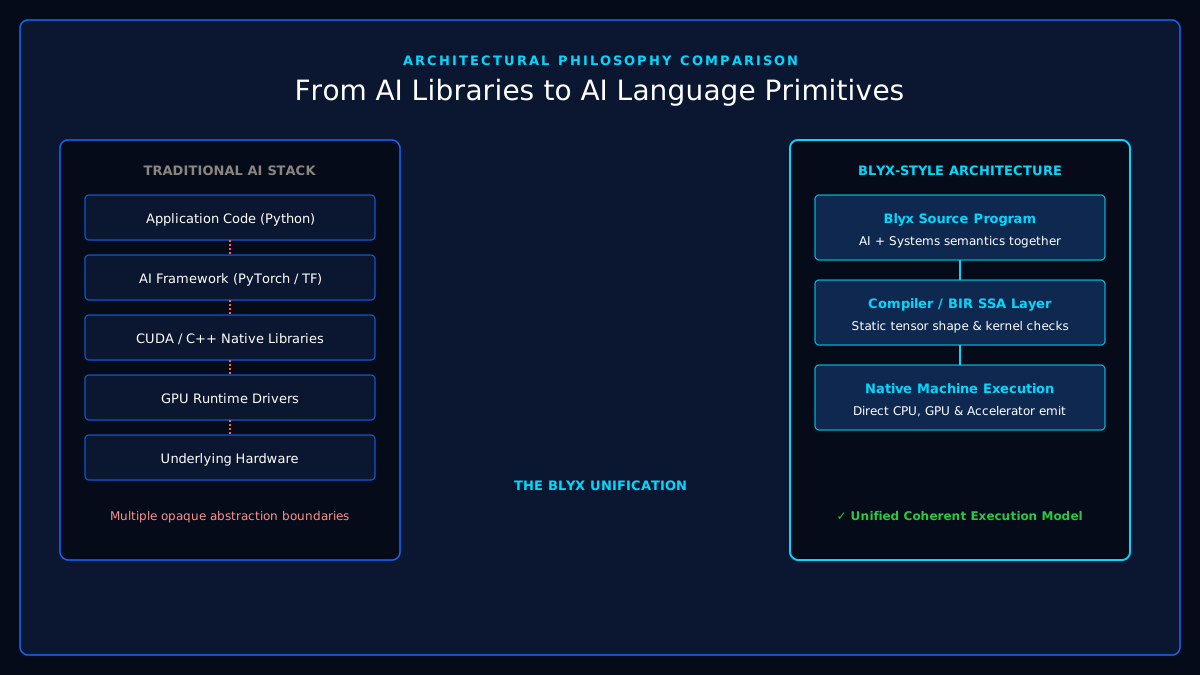
The 4-stage progression from AI as an API to AI as a compiler abstraction.
There is a progression happening in software:
- AI as an API
- AI as a library
- AI as a framework
- AI as a language primitive (Blyx)
- AI as a compiler / hardware abstraction
The Long-Term Vision
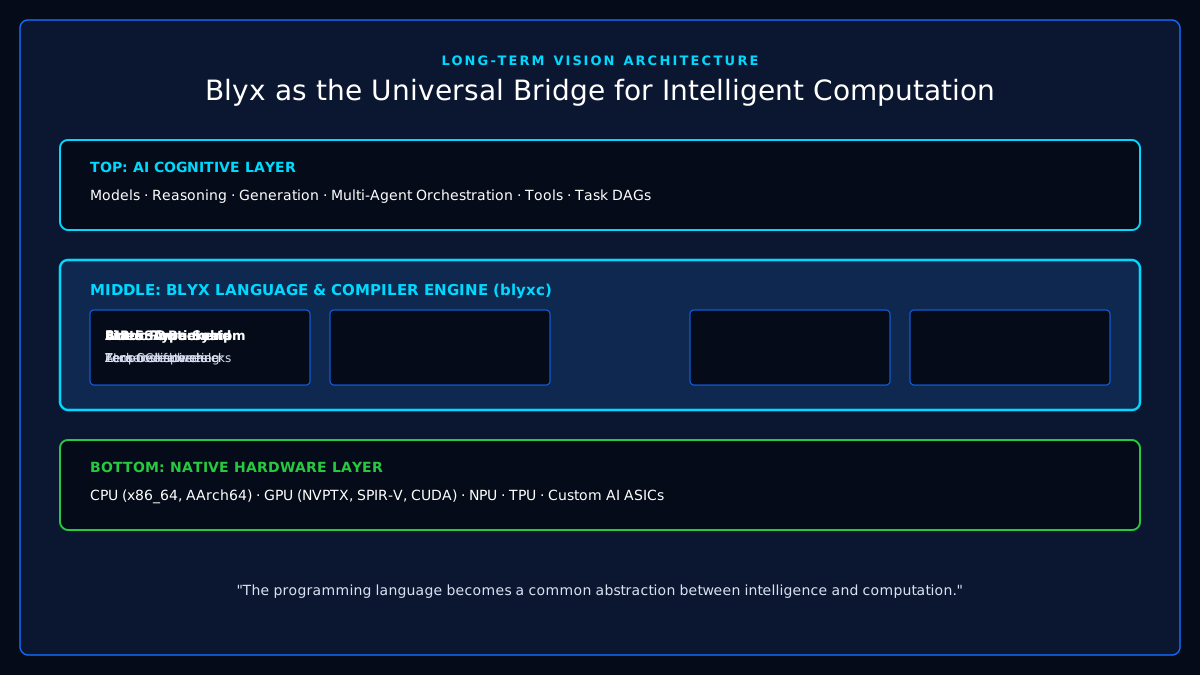
Blyx as a universal abstraction layer connecting AI cognitive models to native hardware.
The current Blyx implementation is an alpha project. But early-stage projects are valuable because they allow developers to explore ideas that established ecosystems cannot easily experiment with.
The Most Interesting Question
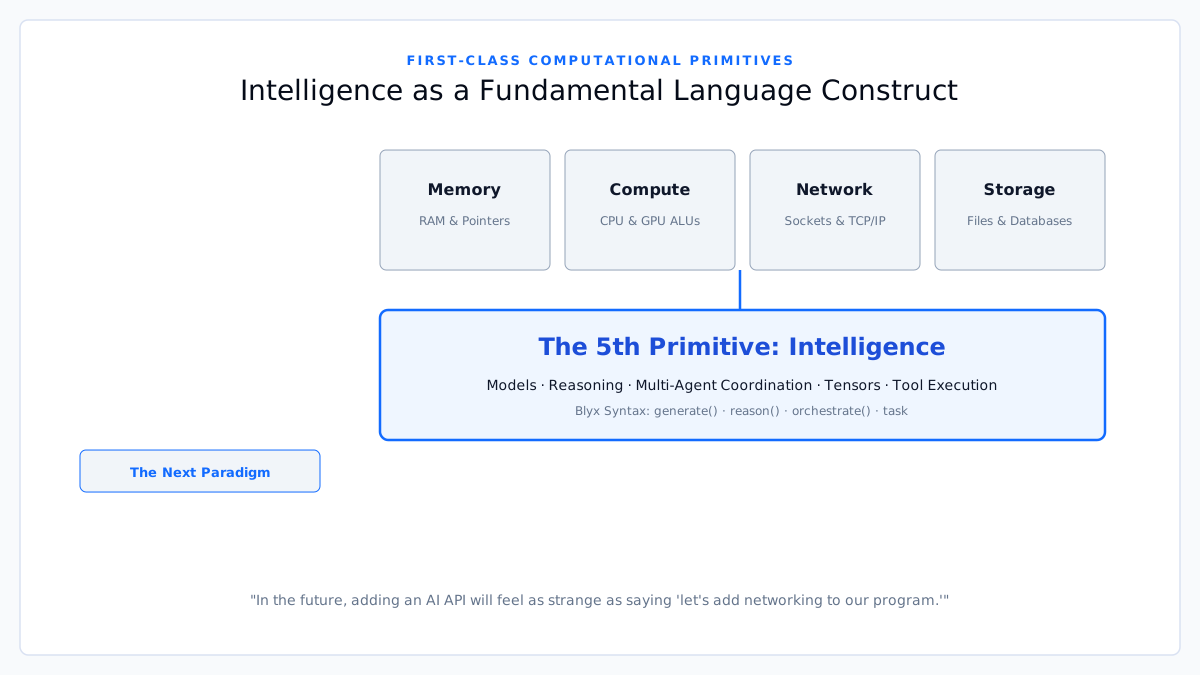
Adding intelligence alongside memory, compute, network, and storage as fundamental primitives.
The most interesting question about Blyx is not whether it is faster than Rust or better than Python. The more interesting question is:
What should a programming language look like when intelligence is as fundamental to software as memory, computation and networking?
We already have abstractions for memory, threads, processes, files, sockets, databases, and GPU kernels. Perhaps the next generation of programming languages will also have abstractions for models, reasoning, agents, inference, tools, and orchestration.
Final Thoughts
Blyx is an open-source experiment in programming what should think, reason, and act.
Blyx is still young. It is currently an alpha-stage project, so it would be premature to claim that it has solved AI programming or that it can replace mature ecosystems such as Python, Rust, C++, or CUDA.
The project is open source under the MIT and Apache-2.0 licenses, providing documentation, a learning environment, an interactive playground, compiler information, benchmarks and package tooling.
Whether Blyx becomes a widely adopted programming language, a research platform, or simply contributes ideas to future languages, the experiment itself is valuable.
Rahul Chaube
Founder & CEO, EverestQ · Language Architect, Blyx
Building AI infrastructure for South Asian languages.